

Santa Ana Work Injury Lawyer
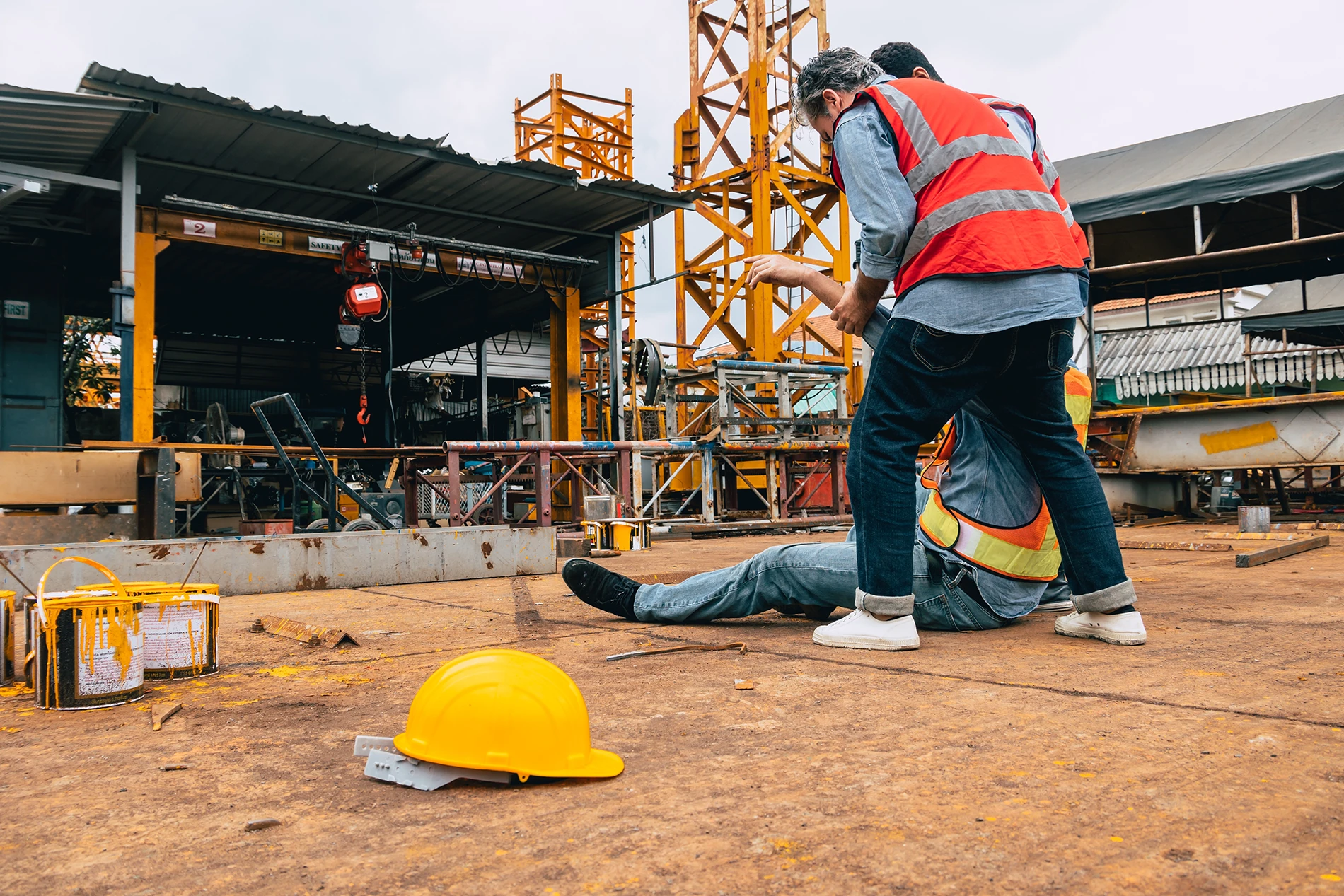
Hurt on a Santa Ana job site, or worn down by years of the same motion on a production line? Workers’ comp covers your treatment and part of your pay. If a general contractor, another trade, an equipment maker or a property owner caused the harm, California also lets you bring a separate civil claim against them, and that claim can pay for losses comp leaves out.
Call (310) 288-3000 for a free case review. Saeedian Law Group handles injury cases on contingency, so there is no fee unless we recover money for you.
Santa Ana is the county seat, and a lot of Orange County’s physical work happens inside its limits. The industrial blocks along East Dyer Road near the 55 Freeway hold distribution centers and light manufacturing. The city’s General Plan names the Grand Avenue and 17th Street area and the 55 Freeway and Dyer Road area as focus areas for new growth, which means more demolition, grading and building. Downtown, OCTA’s OC Streetcar runs along Santa Ana Boulevard. Each of these places puts workers next to heavy equipment, other trades and people who are not their employer.
That last point matters. A California work injury can run on two tracks at once. The workers’ comp claim goes against your employer and its insurer, and it is heard by the Workers’ Compensation Appeals Board. A third-party claim goes against anyone else whose carelessness hurt you, and it is filed in Orange County Superior Court at the Central Justice Center, in the same downtown Civic Center as Santa Ana City Hall. Our California work injury practice is built around running both tracks together.
Serious trauma from Santa Ana job sites usually goes to one of two hospitals. Orange County Global Medical Center on North Tustin Avenue in Santa Ana is an adult Level II trauma center. UCI Medical Center in the City of Orange is the county’s only Level I adult trauma center. Repetitive strain and exposure cases look different: they show up slowly, in an occupational clinic or a family doctor’s office, and the records from those visits end up deciding the date of injury.
If your injury is not work related, such as a crash on your own time or a fall at a store, our Santa Ana personal injury lawyer page covers those claims.
Your Rights After a Santa Ana Work Injury
California gives injured workers specific rights, and several of them come with short clocks. Knowing them before you sign anything or talk to an adjuster puts you in a better spot.
Under California law, you can:
- Claim workers’ comp benefits whatever your immigration status, because Labor Code § 1171.5 extends state labor protections to all workers.
- Sue a negligent third party, such as a contractor or manufacturer, while your comp claim stays open (Lab. Code § 3852).
- File a discrimination claim if you are fired or punished for reporting the injury (Lab. Code § 132a).
- Sue your employer directly if it had no workers’ comp insurance (Lab. Code § 3706).
- Decline a recorded statement to another company’s insurer until you have spoken with a lawyer.
- Speak with our office in English or Spanish.
Heads up
Tell your employer within 30 days.
Labor Code § 5400 asks for written notice within 30 days of the injury. Late notice is not an automatic bar if the employer was not misled or harmed by the delay (§ 5403), but there is no reason to test that rule.
How We Handle Santa Ana Construction and Workplace Injury Claims
A construction or plant injury file has a lot of moving parts: the comp claim, the third-party case, the Cal/OSHA inquiry and the medical evidence. This is the order we work in.
1. Find Everyone Who Was on the Site
We collect the permit, the subcontract list, the daily logs and the names of every trade that was working that day. On a building site, the company that caused the hazard is often not the one that signs your paycheck.
2. Open the Comp Claim Correctly
We make sure the DWC-1 claim form is in, that benefits start, and that you are treated by doctors the rules allow you to see. A late or incomplete form is the most common early problem we see.
3. Pull the Cal/OSHA File
Cal/OSHA’s Santa Ana District Office, at 2 MacArthur Place, Suite 720, investigates many serious injuries in the area. Its inspection notes, photos and citations can be requested and used as evidence in the civil case.
4. Preserve the Equipment
Scaffold parts, ladders, saws and lifts get repaired, returned to the rental yard or thrown out within days. We send preservation letters early so the item that failed is still around to be tested.
5. Track the Medical Record for Both Cases
Comp uses its own doctors and permanent disability ratings. The civil case needs treating records, imaging and expert opinions. We keep one consistent record so neither case undercuts the other.
6. Settle the Two Cases in Step
A comp settlement and a third-party settlement affect each other through the employer’s lien and credit. We work them out together so you know your net number before you sign.
Types of Santa Ana Work Injury Cases We Handle
Falls from scaffolds, ladders, roofs and floor openings on residential and commercial jobs, including tenant improvement work in office buildings.
Cave-ins during utility, sewer and foundation work. Cal/OSHA requires a permit for trenches 5 feet or deeper that a worker must enter.
Workers hit by forklifts, skid steers, delivery trucks or swinging loads on job sites and in the Dyer Road warehouse district.
Carpal tunnel, tendon and shoulder damage from assembly, packing, sewing and tool work done thousands of times a shift.
Disc and joint injuries that build up over years of lifting, carrying drywall, or working on concrete floors.
Lung disease linked to cutting concrete, block, tile and stone, including engineered stone countertop fabrication.
Amputations, crush injuries and lacerations from saws, presses and machines with missing or failed guards.
Shocks and burns from live circuits, temporary power on job sites and contact with overhead lines.
Common Causes of Santa Ana Work Injuries
The cause of the injury tells us who else may share the blame. These are the patterns we look at first on Santa Ana files.
Who Can Be Held Liable for a Santa Ana Work Injury?
Your employer is usually off limits in court because comp is the exclusive remedy against it. Other companies on the job are not. Here is who we look at.
Under Privette v. Superior Court (1993), a company that hires a contractor is usually not liable to that contractor’s workers. The exceptions matter: Hooker (2002) covers a hirer that kept control and whose choices contributed to the injury, and Kinsman (2005) covers a hidden hazard the hirer knew about and did not disclose.
A framing crew that left an opening uncovered or an electrician who left a circuit live can be sued directly by a worker employed by a different company.
Manufacturers and sellers of saws, lifts, scaffolds, presses and stone slabs can face product liability claims when a design or warning defect caused the harm.
An owner who controls the premises, or who knew about a hidden dangerous condition, may share responsibility, subject to the same Privette limits.
Labor Code § 3602 allows a direct suit for a willful physical assault by the employer, for fraudulent concealment that made the injury worse, and in a few other listed situations. Section 3706 allows a suit when the employer carried no comp insurance.
If your claim is mainly about a construction site, our California construction injury page explains the third-party rules in more depth, and our article on the most common types of construction accidents walks through the usual scenarios.
What Compensation Can You Recover?
Workers’ Comp Benefits
- Medical treatment for the work injury
- Temporary disability pay while you cannot work
- Permanent disability based on a rating
- A supplemental job displacement voucher in qualifying cases
- Death benefits for dependents
Third-Party Damages
- Your full lost wages, not a percentage
- Loss of future earning capacity
- Pain, suffering and emotional distress
- Loss of enjoyment of life
- Your spouse’s loss of consortium claim
Punitive Damages
Possible against a third party whose conduct was oppressive, fraudulent or malicious under Civil Code § 3294.
Rare, and they need clear and convincing proof. A company that knowingly ignored a known safety hazard is the usual fact pattern.
Comp does not pay for pain and suffering at all. That gap is why we look hard for a third party on every serious Santa Ana file. When there is one, the employer’s insurer gets repaid from that recovery for benefits it paid (Lab. Code § 3856), and it can be relieved of paying further benefits up to your net recovery (§ 3858), with the appeals board allowing a credit against future benefits (§ 3861). Those rules shape what lands in your pocket.
Where Santa Ana Work Injuries Happen, and Who Responds
Where you were hurt decides who shows up, who writes the first report and which records exist. In Santa Ana, the usual players are these.
Santa Ana has contracted fire and rescue service to OCFA since 2012. OCFA crews respond to job site emergencies, and their incident reports record what they found on arrival.
SAPD, headquartered at 60 Civic Center Plaza, responds when a work injury involves a vehicle on a city street, an assault or a death.
Located at 2 MacArthur Place, Suite 720, Santa Ana, CA 92707. Employers must report a serious injury, illness or death to Cal/OSHA within 8 hours under 8 CCR § 342.
Business parks and distribution buildings line East Dyer Road. Forklift, racking and loading dock hazards are part of daily work in this corridor.
Projects such as OCTA’s OC Streetcar put private contractors on public land. A claim against a private contractor follows normal rules. A claim against a public agency needs a government claim within six months.
Cumulative Trauma: When a Santa Ana Job Wears You Down
Not every work injury has a date and a time. California law recognizes two kinds of injury. A specific injury comes from one incident. A cumulative injury comes from repetitive physical or mental strain over a period of time, and it is covered just the same (Lab. Code § 3208.1).
The hard part is the date. Under Labor Code § 5412, the date of injury for a cumulative trauma claim is the day you first had disability from it and knew, or reasonably should have known, that work caused it. For a packer whose wrists gave out in the spring, that may be the day a doctor took her off work and tied it to the job. That date starts the one-year period to file a claim with the appeals board (§ 5405), so we pin it down early.
Cumulative trauma claims often name more than one employer or insurer, especially for people who moved between staffing agencies or crews over the years. The appeals board decides who pays. A civil claim is less common in these cases, because repetitive strain usually comes from the job itself. The exception is exposure from a product: silica from engineered stone slabs, or solvents with a missing warning, can support a claim against the maker or seller.
Signs a repetitive injury may be work related
- Numbness or pain that eases on days off and returns on shift
- Coworkers on the same line or crew with the same complaints
- A doctor who asks about your job duties and writes them in the chart
- Symptoms that got worse after a production rate or tool change
Why Choose Saeedian Law Group?
Michael Saeedian founded the firm in 2009, and its work is limited to personal injury and wrongful death.
We coordinate the comp claim and the third-party case so the settlement of one does not undercut the other.
Third-party cases from Santa Ana are filed at the Central Justice Center, and we prepare each file for that courthouse.
You can talk to the attorney on your case, not only a case manager.
No fee unless we recover money for you, and no charge for the first consultation.
Our intake staff speak English and Spanish.
What to Do After a Santa Ana Work Injury
The first two weeks after a job site accident, or after a doctor first links your pain to work, decide a lot. This is what we tell new clients.
How Long Do I Have to File a Claim?
⚠ Work Injury Deadlines
- Notice to your employer: within 30 days of the injury (Lab. Code § 5400).
- Workers’ comp claim with the appeals board: generally one year from the date of injury or from the last benefit provided (Lab. Code § 5405).
- Cumulative trauma: the date of injury is set by Lab. Code § 5412, which can be well after the work began.
- Third-party lawsuit against a private company: 2 years (Code Civ. Proc. § 335.1).
- Claim against a public agency: a written government claim within 6 months (Gov. Code § 911.2).
- Retaliation for filing: a § 132a claim within one year of the discriminatory act.
These periods can overlap and interact. Call early so none of them runs out while you are still in treatment.
Where a Santa Ana Work Injury Case Is Heard
Your comp case goes to the Workers’ Compensation Appeals Board. Orange County has two district offices, one at 2 MacArthur Place in Santa Ana and one on North PacifiCenter Drive in Anaheim. The board’s venue rules in Labor Code § 5501.5 let the case be filed based on where you live, where the injury happened (or where the last harmful exposure happened in a cumulative trauma case), or where your lawyer’s office is.
A third-party lawsuit is a civil case in the Superior Court of Orange County. Unlimited civil cases, the ones seeking more than $35,000, are heard at the Central Justice Center, 700 Civic Center Drive West, in Santa Ana’s Civic Center. For most Santa Ana clients that courthouse is a few miles from home or from the job site.
Speak With a Santa Ana Work Injury Lawyer Today
Call (310) 288-3000 or request a free consultation. We take calls seven days a week, in English or Spanish.
Tell us what happened on the site or on the line, who else was working there, and what your doctors have said. From there we can tell you whether a third-party case looks worth pursuing alongside your comp claim.
There is no charge for the review. If we take the case, it is on contingency, and the fee comes only from money we recover.
Our Rancho Cucamonga Office — 29.1 Miles from Santa Ana
Saeedian Law Group serves Santa Ana clients from our Rancho Cucamonga office at 8916 San Bernardino Rd, Suite 110, Rancho Cucamonga, CA 91730. Call +1-310-288-3000 or visit by appointment.
Frequently Asked Questions
Which workers’ comp office handles a Santa Ana claim?
Orange County has two Workers’ Compensation Appeals Board district offices. One is at 2 MacArthur Place, Suite 600, in Santa Ana. The other is at 1065 N. PacifiCenter Drive in Anaheim. Your case is not automatically assigned to the office closest to your job. Labor Code § 5501.5 lets the application be filed in the county where you live, the county where the injury happened (for cumulative trauma, where the last harmful exposure happened), or the county where your lawyer’s office is. Hearings and conferences take place at the assigned district office, so the choice affects where you travel.
Can I sue the general contractor on a Santa Ana construction site?
Sometimes. You usually cannot sue your own employer, but a general contractor that employed a different company is a separate business. The starting rule is Privette v. Superior Court (1993), which says a company that hires a contractor generally is not liable to that contractor’s workers. Two exceptions come up often. Under Hooker v. Department of Transportation (2002), a hirer can be liable if it kept control over the work and the way it used that control contributed to the injury. Under Kinsman v. Unocal (2005), a hirer can be liable for a hidden hazard it knew or should have known about and did not disclose. Site meeting notes, safety plans and emails usually decide which side of the line a case falls on.
I fell from a scaffold or ladder on a Santa Ana job. Who besides my employer could be responsible?
Start with the equipment and the site. If a scaffold plank, brace or ladder failed, the company that rented, erected or made it may be liable. If another trade removed a guardrail or left a floor opening uncovered, that subcontractor may be liable. If the general contractor controlled the site schedule and pushed crews to work around a known gap in fall protection, the Hooker exception may apply. Cal/OSHA rules require fall protection when a construction worker is exposed to a fall of more than 7½ feet from an unprotected edge, and a violation can be evidence of negligence. We ask for the scaffold tag, the erection records and any Cal/OSHA file early.
I cut concrete or stone for years and now have lung problems. What are my options?
Breathing respirable crystalline silica dust from cutting, grinding or drilling concrete, block, tile and stone can cause silicosis and other lung disease. Cal/OSHA sets a permissible exposure limit of 50 micrograms per cubic meter over an eight-hour shift for construction work (8 CCR § 1532.3). A silica illness is usually a cumulative trauma or occupational disease claim in workers’ comp, and the date of injury follows the knew-or-should-have-known rule in Labor Code § 5412. If the dust came from a product sold without adequate warnings, such as engineered stone slabs, there may also be a product liability claim against the manufacturer or distributor. Keep a list of every shop and job site you worked, with dates.
When does the clock start on a repetitive motion injury?
For cumulative trauma, the date of injury is not the day the pain started. Labor Code § 5412 sets it as the day you first suffered disability from the condition and knew, or with reasonable diligence should have known, that your job caused it. Disability usually means lost time from work or work restrictions, not just discomfort. Knowledge often comes from a doctor tying the condition to your duties. That date matters because Labor Code § 5405 generally gives one year from it, or from the last benefit furnished, to start proceedings with the appeals board. If you are a Santa Ana warehouse or line worker with symptoms in both hands, write down when a doctor first linked it to work.
Can I still bring a cumulative trauma claim if I changed jobs?
Yes. Repetitive strain often develops across more than one job, and cumulative trauma claims routinely list several employers or insurance carriers over the period of exposure. The appeals board sorts out which employers and carriers are responsible for paying. What you need is a clear work history: the names of each employer or staffing agency, the dates, the job duties and the physical demands of each role. Pay stubs, W-2 forms and old badges help fill gaps. A medical opinion that the combined work activity caused the condition carries the claim. Leaving a job does not erase the injury, and some people only learn the cause after they have moved on to a new position.
Can I be fired for filing a workers’ comp claim in Santa Ana?
California makes it illegal for an employer to fire, threaten or discriminate against a worker because the worker filed or said they would file a comp claim, or because they testified in another worker’s case. That is Labor Code § 132a. If the board finds a violation, the remedies include reinstatement and back wages and benefits, and for claim-related discrimination an increase in compensation of one-half, capped at $10,000, plus some costs. The petition goes to the appeals board within one year of the discriminatory act. An employer can still make lawful business decisions, so dates, emails and the reasons given for a firing make a difference. Save any written warnings or schedule changes that followed your report.
Do undocumented workers in Santa Ana qualify for workers’ comp?
Yes. Labor Code § 1171.5 says the protections, rights and remedies available under state law are available to all individuals regardless of immigration status, except for any reinstatement remedy that federal law prohibits. In practice that means an injured worker without papers can claim medical treatment and disability benefits through workers’ comp, and can bring a civil claim against a negligent third party. Your immigration status is not part of the comp claim form. Some workers worry that reporting an injury will lead to questions about status. We can talk through those concerns confidentially before anything is filed, in English or Spanish.
I was paid in cash or called an independent contractor. Am I covered?
Maybe more than you think. Under Labor Code § 2775, a person who works for pay is presumed to be an employee unless the hiring company proves all three parts of the ABC test: you were free from its control, the work was outside its usual business, and you were customarily in an independent business doing the same kind of work. The statute has exemptions, including for some construction subcontracting arrangements, so the answer depends on the facts. If you were an employee and the company had no comp insurance, Labor Code § 3706 lets you sue it directly, and the state’s Uninsured Employers Benefit Trust Fund may also be a source of benefits. Day laborers hurt on Santa Ana jobs should keep any texts or payment records.
Will the comp insurer take part of my third-party settlement?
Usually, yes. When you recover from a third party, such as a contractor or equipment maker, the employer or its insurer has a lien for the comp benefits it paid. Under Labor Code § 3856, litigation costs and attorney’s fees come off the top, then the lien is paid, then you receive the balance. Section 3858 adds a credit: the employer can stop paying further comp benefits up to the amount of your net recovery. That credit is why the order and wording of the two settlements matter so much. A lien can sometimes be reduced, for example where the employer shares fault for the injury. We work out these numbers before you sign either settlement, so you can see your net.
What deadlines apply to a Santa Ana work injury?
Several, and they run at the same time. Give your employer written notice within 30 days (Labor Code § 5400), although late notice does not bar the claim if the employer was not misled or prejudiced (§ 5403). Comp proceedings with the appeals board generally must start within one year of the injury or the last benefit provided (§ 5405). A civil lawsuit against a private third party must be filed within two years under Code of Civil Procedure § 335.1. If a public agency may share responsibility, a written government claim is due within six months (Government Code § 911.2). A retaliation claim under § 132a has a one-year limit. Missing any one of these can close off part of your recovery.
What if I was hurt on a public project, like streetcar or city construction?
Public projects in Santa Ana, such as OCTA’s OC Streetcar along Santa Ana Boulevard, are built by private contractors and subcontractors. If your employer was one of those companies, your comp claim works the same way as on any other job. A claim against a different private contractor on the project follows the normal two-year civil rule and the Privette limits. A claim against the public agency itself, for example for a dangerous condition of public property, is different: you must present a written government claim within six months under Government Code § 911.2 before you can sue. Because the public agency deadline is so short, identify every entity involved early.
A trench caved in on our crew. What should happen next?
Get medical care first. Then know what the rules require of the employer. Cal/OSHA requires a permit for constructing trenches or excavations 5 feet or deeper that any worker must enter (8 CCR § 341), and employers must report a serious injury or death to Cal/OSHA within 8 hours (8 CCR § 342). Cal/OSHA’s Santa Ana District Office, at 2 MacArthur Place, may open an inspection. Its report, photos and any citations can be used later. Write down the depth, whether there was shoring, a trench box or sloping, who dug the trench, and which company controlled the site. Utility owners, the general contractor and the excavation subcontractor may all be part of the picture.
Where would my third-party lawsuit be filed?
In the Superior Court of California, County of Orange. Unlimited civil cases, which seek more than $35,000, are heard at the Central Justice Center at 700 Civic Center Drive West in Santa Ana. That is the same courthouse complex near the county and city government buildings downtown. Your comp case runs separately at the appeals board, so you may have two cases moving at once, in two different places, with different judges and rules. Some civil cases can be filed in another county when a defendant is based there, and we review that question at the start. We prepare each file as though it will be tried there.
About the Author
Michael Saeedian, Esq., Founding Attorney, Saeedian Law Group (California State Bar #265470). Michael founded Saeedian Law Group in 2009 and has represented injured Californians and their families in personal injury and wrongful death matters for more than 16 years. His practice includes third-party work injury cases arising in Santa Ana and across Orange County.
Legal disclaimer: This page provides general information about California injury law and does not constitute legal advice. Every case is different; past results do not guarantee future outcomes. Reading this page does not create an attorney-client relationship with Saeedian Law Group. For advice specific to your situation, contact our office at (310) 288-3000 or schedule a free consultation.









Nearby Cities We Serve for Work Injury Cases
Saeedian Law Group handles work injury cases across Southern and Northern California. If Santa Ana is near your incident, these neighboring cities are also served by our team:
Browse all California personal injury practice areas or see every California city we serve for jurisdiction-specific information.