

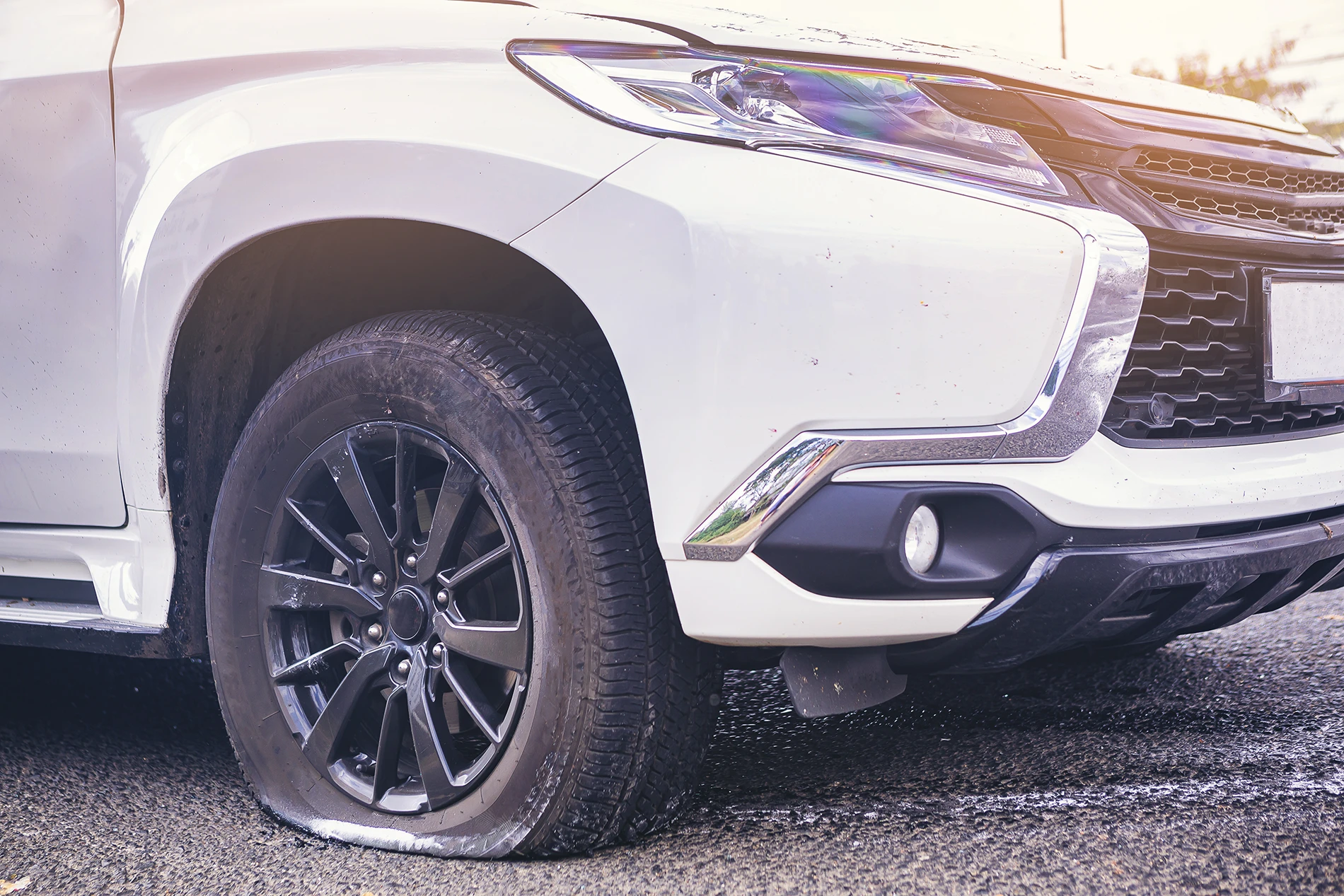
Los Angeles Product Liability Attorney
If a product injured you in Los Angeles, the most valuable piece of evidence is usually the product itself. A shattered pressure cooker, an e-bike battery that ignited in a garage, a ladder whose rail folded, or a medical device that stopped working can show an engineer what went wrong in a way that photographs and memories cannot. Keep it, keep everything that came with it, and do not send it back to the seller or manufacturer before you have spoken with a lawyer about how to preserve it.
Saeedian Law Group handles product-injury claims for people throughout Los Angeles County. The firm’s headquarters is at 9100 Wilshire Boulevard, Suite 500W, in Beverly Hills, a few miles from downtown; it also has offices at 15701 Ventura Boulevard in Encino and in Rancho Cucamonga. Attorneys Michael Saeedian and Daniella Saeedian review these cases, and a first consultation is free.
Preserve the product, its packaging, and the purchase trail
Store the item somewhere dry and secure, in the condition it was in after the incident. Do not clean it, test it, try to repair it, or take it apart. If it burned or broke into pieces, collect the fragments you can safely gather and keep them together. A manufacturer’s insurer may ask for the product “for inspection”; handing it over can mean losing control of the most important exhibit in the case.
Alongside the item, gather the box, manual, warning labels, receipts, order confirmations, the online listing (a screenshot or saved web page), serial and model numbers, and any registration card. For products bought on a marketplace website, the seller’s storefront name and the fulfillment details matter, because the company that shipped the item is not always the company that made it. Photograph the scene where the injury happened before it changes, and write down who else used the product and how it was stored.
Three kinds of defect California recognizes
California was the first state to adopt strict liability for defective products, in Greenman v. Yuba Power Products (1963). Under that rule an injured person does not have to prove the manufacturer was careless. The question is whether the product was defective and whether the defect was a substantial factor in causing harm. California’s civil jury instructions (the CACI 1200 series) describe three categories.
A manufacturing defect means the particular unit differed from the manufacturer’s own design or from other units on the same line, such as a weld that failed or a contaminated batch. A design defect affects every unit built to the design. Under Barker v. Lull Engineering (1978), a design can be found defective if it failed to perform as safely as an ordinary consumer would expect when used in an intended or reasonably foreseeable way, or if the risks of the design outweigh its benefits. The consumer-expectations test does not fit every product; courts limit it when the question requires technical expert judgment. A warning defect means the product lacked adequate instructions or warnings about a risk that was known or knowable to the manufacturer.
Many cases also include a negligence claim, and some include a breach-of-warranty claim. Which theories fit depends on the product and the evidence.
Who in the chain of distribution may be responsible
Strict liability is not limited to the brand name on the label. California courts have applied it to component makers, distributors, and retailers that placed the product into the stream of commerce (Vandermark v. Ford Motor Co., 1964). A California appellate court has also held that an online marketplace can be strictly liable for a product sold by a third-party seller through its platform (Bolger v. Amazon.com, 2020), though how far that reasoning reaches depends on the marketplace’s role in each sale.
That matters in Los Angeles, where many consumer goods arrive through importers, warehouses, and third-party sellers. A manufacturer located overseas may be difficult to sue; a domestic importer or retailer may be within reach. Identifying every business that handled the product is one of the first steps in a product claim.
Recalls and safety reports help, but they do not decide the case
Check whether the product has been recalled. The U.S. Consumer Product Safety Commission publishes consumer-product recalls and accepts public injury reports through SaferProducts.gov. For vehicles, tires, car seats, and motor-vehicle equipment, the National Highway Traffic Safety Administration maintains a recall search by VIN.
A recall can be strong evidence that a risk was known, but it is not required to bring a claim, and the absence of a recall is not a defense. Filing your own report can create a public record; talk with a lawyer first if the report might describe facts that are still being investigated.
When a product claim overlaps with another kind of case
Product injuries often happen inside another event. A defective machine guard on a job site may lead to a workers’ compensation claim against the employer and a separate product claim against the machine’s manufacturer; the Los Angeles workplace accident page explains the employment side. Battery fires in scooters and e-bikes are covered on the electric scooter accident page, and serious burns on the burn injury page. When a vehicle component fails in a crash, the case may involve both the at-fault driver and the manufacturer. Injuries from a dangerous condition on property, rather than a product, belong with premises liability.
How the Los Angeles Superior Court handles product cases
Under Los Angeles Superior Court Local Rule 2.3, the place where the injury occurred is one of the factors that determine where a case is filed, and the court’s Filing Court Locator is the starting point for that choice. The court’s personal-injury FAQ (revised February 4, 2020) states that an unlimited case marked on the Civil Case Cover Sheet Addendum as “Product Liability (other than asbestos or toxic/environmental)” is treated as a personal-injury case for assignment purposes. Asbestos and toxic-exposure cases follow separate tracks.
When many people are hurt by the same product, a case may be designated complex. California Rules of Court, rule 3.400, lists claims involving mass torts among the provisionally complex categories, and the court’s Complex Litigation Program sits at the Spring Street Courthouse. Whether an individual injury belongs in that program is a question for the attorneys and the court.
Deadlines for product-injury claims
The general deadline to file a personal-injury lawsuit in California is two years from the injury under Code of Civil Procedure section 335.1. Product cases can involve a delayed-discovery question when the connection between a product and an injury was not reasonably apparent at first. For injuries from exposure to a hazardous material or toxic substance, section 340.8 sets two years from the injury or from when the person knew or reasonably should have known of the injury, its physical cause, and facts suggesting someone else’s wrongful act, whichever is later.
If a public entity owned or maintained the product (for example, equipment at a city facility), a written government claim generally must be presented within six months. Minors and wrongful-death claims have their own rules. Do not wait for the deadline to approach; product evidence becomes harder to collect as time passes.
How fault and misuse are evaluated
California applies comparative fault to strict product liability (Daly v. General Motors, 1978). If a manufacturer argues the product was misused, the question is whether the misuse was reasonably foreseeable. A manufacturer is expected to anticipate foreseeable misuse; an unforeseeable alteration or misuse may reduce or defeat recovery. Removing a guard, modifying a charger, or ignoring a warning can therefore be central disputes, and your account of how the product was used should be precise.
What compensation may include
A product claim can seek medical expenses, lost earnings and earning capacity, property damage (for example, fire damage to a home), and non-economic losses such as pain, emotional distress, and loss of enjoyment of life. When several defendants share responsibility, Civil Code section 1431.2 makes each defendant liable for non-economic damages only in proportion to its share of fault, which affects how claims against multiple companies are structured. Punitive damages are available only in limited circumstances and require a heightened showing.
What to bring to a consultation
Bring photographs of the product and the scene, the purchase record, the manual and packaging if you have them, medical records or a list of providers, and any letters or emails from the seller, manufacturer, or an insurer. Do not bring the product to the meeting unless you are asked to; it is safer where it is.
Call (310) 288-3000 or contact the firm to schedule a free consultation about a Los Angeles product injury.
This page is general information, not legal advice, and does not create an attorney-client relationship.






Browse all California personal injury practice areas or see every California city we serve for jurisdiction-specific information.
Nearby Cities We Serve for Product Liability Cases
Saeedian Law Group handles product liability cases across Southern and Northern California. If Los Angeles is near your incident, these neighboring cities are also served by our team: