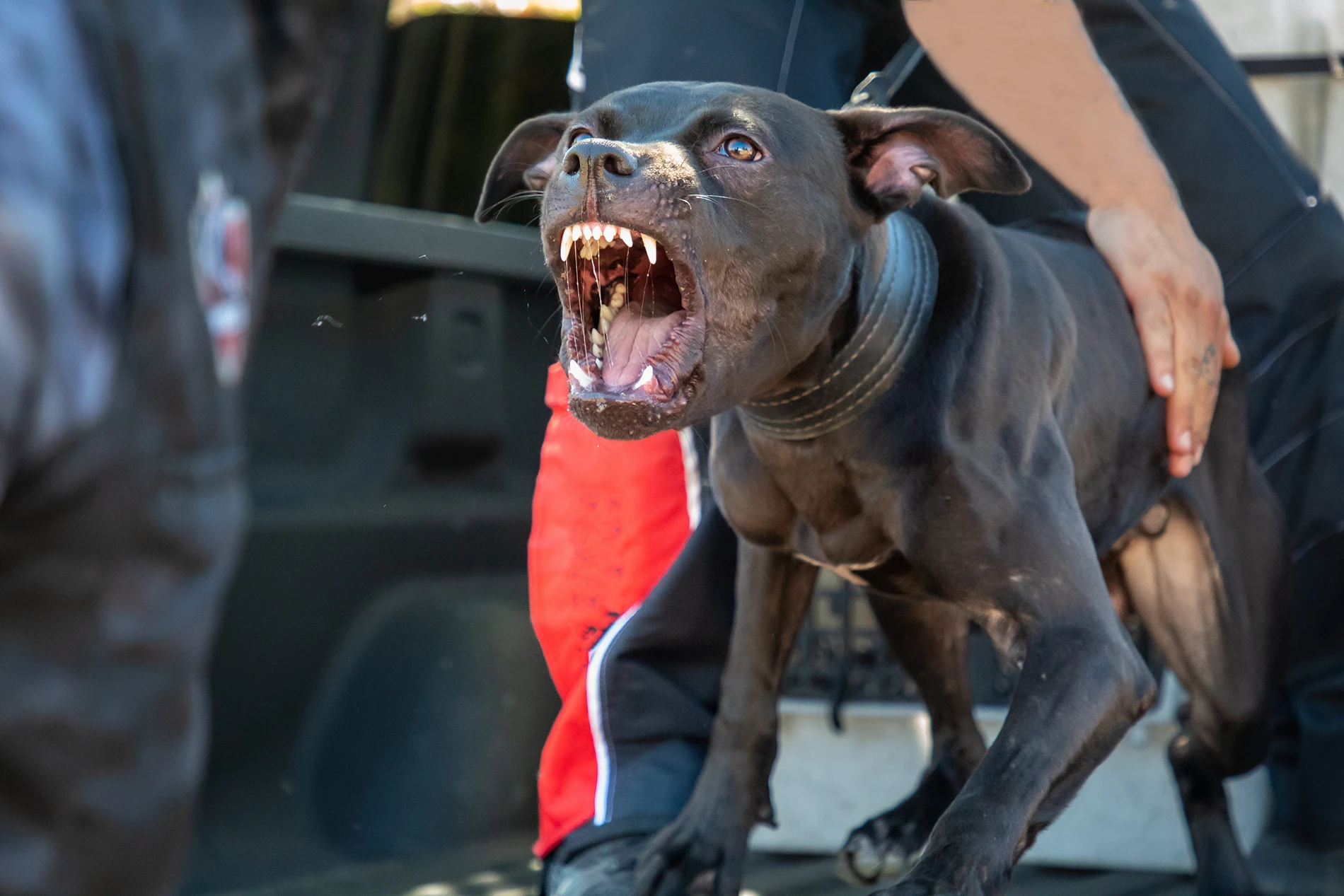
Escondido Dog Bite Attorney
After a dog bite, the details you give a medical provider, animal control, and an insurer serve different purposes. The address helps identify the agency responsible for the animal. A bite report helps document what happened and arrange monitoring. A civil claim asks who is legally responsible for the injury and what losses can be proved. Completing one process does not complete the others.
Saeedian Law Group offers a free consultation about dog bite injury claims. If you were bitten in Escondido, have the incident location, the dog owner’s information if known, and any report number available. You do not need to finish an animal-control investigation before asking about your civil options.
For a human emergency, call 911. When it is safe to do so, wash the bite area with soap and water and contact a healthcare professional promptly. Tell the clinician what animal was involved, when the bite happened, and whether the animal and its vaccination history can be identified. Do not wait for an insurance decision or a quarantine to end before seeking medical advice.
Give the incident address—not just “Escondido”—when reporting
Inside Escondido city limits, the City’s Animal Control page identifies San Diego Humane Society as its contracted animal-control and sheltering provider. Call SDHS at 619-299-7012, press 1, for Humane Law Enforcement. Its responsibilities include responding to dog bites and dangerous-animal complaints.
For an incident in unincorporated San Diego County, the provider is different: the County Department of Animal Services. SDHS’s jurisdiction information lists that distinction and the County’s number, 619-236-2341. The County’s dog-bite page also lists 619-767-2675 for nonemergency matters.
If the location is near a city boundary, give the dispatcher the exact street address or a clear description of the incident site and ask which agency should handle it. A mailing address or ZIP code should not be treated as proof that the location is inside the city.
The City directs after-hours and holiday calls to the Escondido Police Communications Center at 760-839-4722. SDHS’s current contact page describes emergency dispatch availability separately from its general Resource Center hours. Check the current instructions rather than assuming a shelter’s public visiting hours determine when an urgent report can be made.
If you do not know the owner, report what you do know: the dog’s description, location, direction of travel, and any photographs taken safely. Do not chase, trap, or approach the dog to identify it.
Sending a bite report is different from obtaining the investigation file
SDHS publishes an incident report for injury to a human caused by an animal. It asks for the time and place, the animal and owner if known, the circumstances, the injury, and medical-provider information. Ask SDHS how to submit the current form and how to add information later. Keep your own account and any confirmation or case number.
Two details on that form deserve care. It asks whether the bite broke the skin; answer accurately, but do not assume an unbroken-skin bite can never support a civil claim. It also says dog-park incidents are filed as “information only.” Do not treat an agency’s administrative classification or “use at your own risk” wording as a final legal determination of your rights. The facts, applicable law, and any defenses still require review.
To seek a copy, contact the agency that took the report. Identify the date, exact location, case number, and your connection to the incident, and ask what records are available, whether the investigation remains open, and what release requirements apply. An incident report, investigation notes, and quarantine documentation may be separate records. Availability, redactions, and release procedures can vary; do not assume you can immediately obtain a complete file or someone else’s medical information.
For records actually held by the County, its Public Records request page provides a request channel. That does not establish that the County holds an SDHS file. Ask who maintains the specific record instead of sending every request to the same office.
Animal monitoring and rabies advice have separate roles
San Diego County Public Health says animal bites must be reported to the local animal-control provider. Animal control coordinates post-bite monitoring. The County’s guidance describes a 10-day observation period for a domestic dog following the exposure, regardless of its vaccination status. Ask the responsible agency where and how the dog will be monitored; do not arrange your own capture or rely on an owner’s informal assurance that the dog is healthy.
A monitoring period is a public-health measure, not an award of damages or, by itself, a decision that a dog must be destroyed. A safety investigation or dangerous-dog process is also separate from the owner’s civil responsibility.
The County’s rabies guidance directs exposure and treatment questions to a healthcare provider and the Epidemiology Unit, 619-692-8499. Rabies is also a reportable animal disease through the County’s animal-disease reporting process. Public Health oversees the relevant disease response and laboratory testing when indicated; it is not the dog owner’s liability insurer.
If the dog cannot be located, tell the clinician and animal-control agency promptly. Whether rabies-related treatment is needed is a clinical and public-health question—not something a lawyer can determine from a photograph or the dog’s apparent behavior.
The California bite claim depends on specific facts
Under Civil Code section 3342, a dog owner can be liable for a bite suffered in a public place or while the person was lawfully on private property, including the owner’s property. The rule does not require proof of an earlier bite or the owner’s knowledge that the dog was dangerous.
The claimant still needs to establish ownership, the bite and qualifying location, harm, and the connection between the dog and that harm. Lawful presence can include an express or implied invitation or performance of a duty described in the statute. Where you entered, why you were there, and what permission you had can therefore matter. The Judicial Council’s civil jury instructions, including CACI 463, explain these elements and note that the skin need not be broken for the bite statute to apply.
An injury without a bite, such as being knocked down, does not fall under that bite provision merely because a dog caused it. Negligence or another applicable animal-liability theory may need investigation. A dog walker, sitter, landlord, or other non-owner is not automatically liable under the owner’s bite statute; any separate claim needs its own legal basis and supporting facts.
Strict liability is not a promise of automatic payment. Disputes about lawful presence, what happened before the bite, comparative fault, or assumption of risk can affect a claim. Occupational animal-handling cases require particular care. Section 3342’s police and military provisions are also conditional: the dog’s use, the person’s involvement, and the agency’s written policy matter. Being bitten by a working police dog does not, by itself, answer every liability question.
Preserve evidence without putting yourself or others at risk
Keep a clear record of what you personally observed, rather than guessing about the dog’s history or why it acted as it did. Useful material may include:
- The owner’s name and contact information, the handler’s identity, and the dog’s description or tag details, if safely available.
- The exact place, time, and circumstances, including why you were on private property if that is relevant.
- Photographs of the injury and scene taken safely, witness contacts, and the location of any cameras.
- Your report confirmation, agency correspondence, and any monitoring information provided to you.
- Medical records and bills, work-absence records, and dated notes about how the injury affects daily activities.
Keep original photographs and messages. Ask counsel promptly about preserving video or other records that may change or disappear. Do not enter private areas, access another person’s accounts, or confront the owner to obtain evidence. Requests for third-party records may require consent or legal procedures and do not guarantee production.
A civil claim may seek proven medical expenses, lost income, pain, scarring, emotional harm, and future losses supported by evidence. The treatment required and its likely course should come from qualified professionals, not a settlement calculator. A homeowners, renters, or other liability policy may provide coverage, but the actual policy, exclusions, insured parties, and limits must be checked. An animal-control finding does not establish insurance coverage or guarantee recovery.
Check civil deadlines separately from animal-control follow-up
Many California personal injury lawsuits against private parties are subject to the general two-year period in Code of Civil Procedure section 335.1. A child’s own covered civil claim may have minority tolling under section 352, but that rule does not extend every deadline. In particular, do not assume it postpones a required public-entity claim.
Government Code section 911.2 generally requires presentation of a personal-injury claim against a public entity within six months of accrual, with additional procedural requirements and deadlines. Exceptions, delayed discovery, and tolling need individual review. Reporting a bite, asking for records, or discussing payment with an insurer is not a substitute for the required civil filing or government claim.
If litigation is appropriate in San Diego County, confirm both county venue and the court’s current filing assignment. The Superior Court’s Where to File page uses its ZIP-code list and case-type exceptions. Escondido entries in that list are assigned to North County, whose courthouse is at 325 South Melrose Drive in Vista, but that is not a universal rule for every proceeding; small claims, for example, follow a different current assignment. Court districts also do not determine animal-control jurisdiction.
Discuss the injury claim with Saeedian Law Group
Michael Saeedian founded Saeedian Law Group in 2009, and Daniella Saeedian also practices personal injury law, including dog bite matters. The firm publishes offices in Beverly Hills, Rancho Cucamonga, and Encino—not an Escondido office.
For the statewide overview, see our California dog bite attorney page. For a different type of injury in the area, see our Escondido personal injury page.
Call (310) 288-3000 or contact Saeedian Law Group for a free consultation. Explain where the bite happened, who owned or handled the dog, what care you received, and which agency has a report. Ask which attorney would handle the matter and what additional evidence is needed. The firm advertises contingency fees for accepted injury cases; the written agreement should explain attorney fees and case costs, including responsibility for costs if there is no recovery. No particular result is guaranteed.

Attorney responsible for this page: Michael Saeedian, Founding Attorney. This page provides general information, not advice about your specific situation. Reading it does not create an attorney-client relationship.