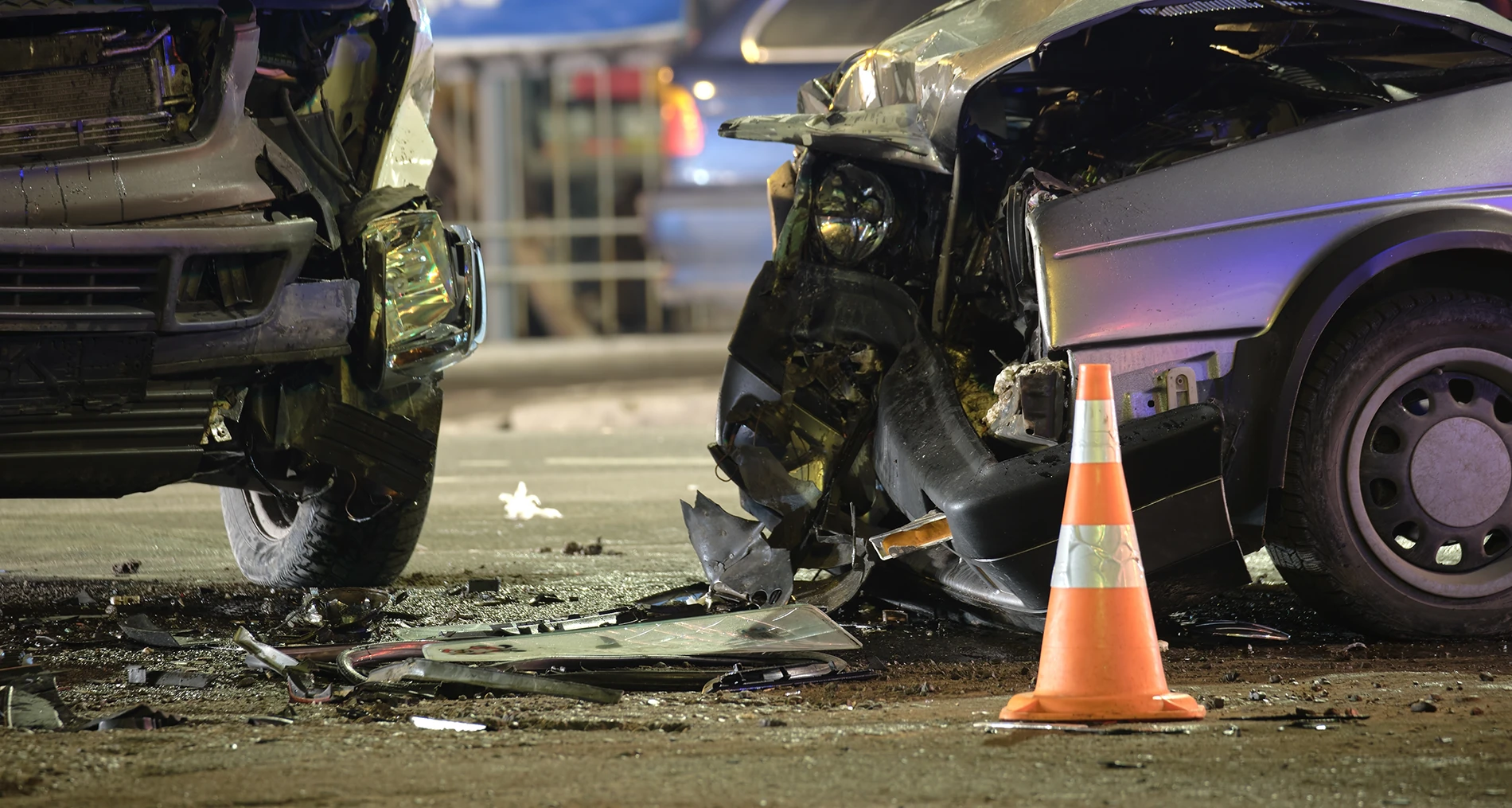
California Hit-and-Run Accident Lawyer
California recorded more than 300,000 hit-and-run incidents in a recent five-year window according to CHP SWITRS data, with pedestrians and cyclists disproportionately affected — and under Vehicle Code § 20001, a driver who flees a crash involving injury or death commits a felony. If you or a loved one was hit by a driver who fled the scene in California — whether you were driving, walking, riding a bicycle, or on a motorcycle when the other vehicle took off, you may have the right to pursue compensation for medical bills, lost wages, pain and suffering, and more — even if you were partly at fault.
Call (310) 288-3000 for a free, no-obligation consultation with Saeedian Law Group. You pay nothing unless we recover compensation for you.
A hit-and-run crash leaves an injured California resident in the worst possible posture: hurt at the scene, without a defendant to sue, and often blamed by an insurance adjuster for not capturing a license plate while losing consciousness. These cases are some of the most difficult in California personal-injury practice, and they are routinely handled poorly by attorneys who are not familiar with the Insurance Code § 11580.2 uninsured-motorist framework and the overlapping criminal-investigation pathway.
Saeedian Law Group represents hit-and-run victims across California. We handle every fact pattern: drivers rear-ended on the freeway by a vehicle that fled, pedestrians struck in a crosswalk by a driver who sped off, cyclists clipped by a passing car that never stopped, motorcyclists run off the road by a negligent motorist, and wrongful-death families left without a defendant the night of the crash. Our office runs both the civil claim and the criminal-identification channel simultaneously, because the defendant the police identify next month often becomes the civil defendant on your case.
Under California law, leaving the scene of an injury crash is a felony under Vehicle Code § 20001, punishable by up to four years in state prison (and up to six when injury is a great bodily injury). Property-damage-only hit-and-run is a misdemeanor under Veh. Code § 20002. For civil purposes, the most important statute is Insurance Code § 11580.2, which requires California auto policies to include uninsured-motorist (UM) coverage up to stated limits and defines a fleeing driver as an uninsured motorist for UM purposes.
The civil claim typically runs through the victim’s own UM coverage, and often through additional household UIM coverage. Where identification is achieved through surveillance video, doorbell cameras, license-plate readers, or paint-transfer analysis, a direct claim against the driver and any applicable liability insurance becomes available. And in some cases, a John Doe complaint filed within the statute of limitations preserves the option to substitute the real-name defendant later. Our office pursues all three pathways in parallel.
Your Rights After a California Hit-and-Run Crash
A California hit-and-run victim has multiple avenues to compensation even when the driver is never identified. Your own auto insurance policy is almost always required to include UM coverage under Ins. Code § 11580.2, and that coverage applies when a fleeing driver either was not insured or cannot be located. Insurance Code § 11580.2(b) also defines a phantom-vehicle crash (no contact) to be covered when corroborated by independent evidence. The victim does not need to have been in a vehicle — pedestrians and cyclists struck by hit-and-run drivers can use the household’s auto UM policy.
You have the right to:
- Claim against your own auto policy’s UM coverage under Ins. Code § 11580.2.
- Claim against a household member’s auto policy if you were a resident relative.
- File a John Doe civil suit to preserve the 2-year statute and substitute the identified driver later.
- Pursue the identified driver and any liability carrier once law enforcement locates them.
- Apply for CalVCB (California Victim Compensation Board) benefits when the driver is unidentified.
- Retain counsel on contingency — no fees unless we recover.
Heads up
Your UM coverage can pay even if the driver is never identified.
Ins. Code § 11580.2 treats an unidentified fleeing driver as an uninsured motorist. A phantom-vehicle claim (no physical contact) requires independent corroborating evidence — do not assume it is impossible.
How Our California Hit-and-Run Lawyers Help
A successful hit-and-run case almost always combines aggressive civil investigation, close coordination with law enforcement, and precise UM-coverage analysis. Here is how we move these cases from the scene to resolution.
1. Run the Identification Investigation in Parallel With Law Enforcement
We subpoena intersection cameras, transit-system video, nearby business CCTV, doorbell (Ring, Nest, Arlo) footage, license-plate readers, and rideshare-platform records. A fleeing driver is often identified within the first 30 days when someone is actually looking — and police often are not.
2. Analyze Paint Transfer, Vehicle Debris, and Witness Descriptions
A side-mirror, a bumper cover, a broken headlight lens, and paint transfer on the victim’s vehicle, bike, or clothing can lead to a specific make, model, and year. We retain forensic experts who routinely testify to these identifications.
3. File the UM Claim Correctly Under Ins. Code § 11580.2
UM claims have notice requirements (typically 30 days after the crash for phantom-vehicle cases with no contact), recorded-statement protocols, and often mandatory arbitration under the policy language. Mishandling any of these can cost the claim.
4. Preserve the John Doe Option
Where identification is likely but not yet complete, we file a John Doe complaint under Code Civ. Proc. § 474 before the two-year statute runs, preserving the ability to substitute the real-name defendant when identification occurs.
5. Coordinate With the District Attorney
If the fleeing driver is caught and charged under Veh. Code § 20001, we coordinate with the DA’s office on restitution under Penal Code § 1202.4, monitor the criminal docket, and time the civil suit around any Fifth Amendment considerations.
6. Try Cases in UM Arbitration and in Superior Court
UM claims are typically arbitrated under the policy, often before AAA or a retired judge. When the carrier refuses a fair UM resolution or when the identified driver’s carrier will not pay, we try the case in arbitration or in superior court.
Types of California Hit-and-Run Cases We Handle
Freeway or surface-street rear impact; offender departs at high speed.
Crosswalk or mid-block strike; driver leaves victim at scene — Veh. Code § 20001 felony.
Side-swipe, right-hook, or rear strike; high physical impact to rider.
No-contact ‘phantom-vehicle’ crash; rider thrown; UM phantom-vehicle framework applies.
Property-damage misdemeanor under Veh. Code § 20002; note-leaving requirement.
Aggressive driver intentionally strikes and flees — punitive-damages case.
Fleeing driver usually impaired — often caught; punitive-damages case under Civil Code § 3294.
Delivery, rideshare, or company car flees; employer respondeat superior once identified.
Unsecured load, tire retread, or debris thrown by fleeing driver causing secondary crashes.
Low-speed strikes with deferred symptoms; surveillance-video cases.
Survivorship and wrongful-death damages under Code Civ. Proc. § 377.60.
Non-contact run-off-the-road cases; strict notice and corroboration requirements.
Why Drivers Flee in California
Understanding why a driver fled is part of the identification strategy. Case experience and CHP data identify the following recurring patterns:
Who Can Be Held Liable in a California Hit-and-Run?
Once identification is complete, liability often extends beyond the driver. Depending on the facts, these defendants may be named:
Primary defendant once identified — civil liability plus restitution under Penal Code § 1202.4.
Respondeat superior if the driver was on a work errand, delivery run, or service call.
Uber, Lyft, DoorDash, Amazon Flex — coverage layers depend on trip-status.
Under Veh. Code § 17150 (permissive-user liability, capped at $15,000/$30,000/$5,000).
Graves Amendment limits vicarious liability, but direct negligence claims (negligent maintenance or rental) survive.
B&P Code § 25602.1 for serving an obviously intoxicated minor who then drove and fled.
First-party contractual obligation under Ins. Code § 11580.2; subject to policy terms and arbitration.
Dangerous condition claims under Gov. Code § 835 can survive even without identification of the fleeing driver.
California applies pure comparative negligence, so even a plaintiff alleged to have contributed to the crash (speeding, lane-change, unhelmeted riding) can still recover, reduced by their share of fault. Hit-and-run cases also often involve a mix of first-party UM coverage and third-party liability coverage, which requires careful structuring of releases and offsets so that settling one claim does not prejudice the other. Our office structures those releases deliberately.
What Compensation Can a California Hit-and-Run Victim Recover?
Economic Damages
- Emergency, hospital, and surgical care
- Orthopedic and neurological rehabilitation
- Future medical & long-term care
- Lost wages & diminished earning capacity
- Vehicle, bicycle, or other property damage
Non-Economic Damages
- Physical pain & suffering
- PTSD and anxiety (common after hit-and-run events)
- Disfigurement & scarring
- Loss of enjoyment of life
- Loss of consortium
Punitive Damages
Available under Civil Code § 3294 against fleeing drivers — flight itself supports malice.
Punitive damages are not recoverable under UM contractual coverage but can be pursued against the individual driver once identified.
A crucial limitation in hit-and-run practice: UM contractual coverage does not pay punitive damages. The California Supreme Court and Insurance Code interpretation both hold that UM is first-party contract coverage for compensatory loss only. Punitive damages remain available against the identified driver personally, and the hit-and-run itself — flight from a known injury under Veh. Code § 20001 — typically supplies the malice or conscious-disregard showing needed under Civil Code § 3294. Non-economic damages in California hit-and-run cases are typically calculated by the multiplier method (1.5 to 5 times economic damages based on severity) or the per-diem method (daily rate across active treatment and lasting impairment).
General California Settlement Ranges by Injury Severity
The ranges below reflect general patterns in California hit-and-run settlements and UM awards reported in industry sources and public filings. They are not averages, offers, or predictions — outcomes depend on liability, severity, UM policy limits, whether the driver was identified, and venue.
| Injury Severity | Typical Treatment Profile | General Range (CA) |
|---|---|---|
| Minor soft-tissue | Sprains, contusions, whiplash; ED visit and follow-up | $5,000–$30,000 |
| Moderate injury | Fractures, concussion, disc herniation without surgery | $30,000–$150,000 |
| Serious / surgical | ORIF fracture fixation, spine surgery, rotator-cuff repair | $150,000–$750,000 |
| Severe / permanent | TBI, spinal-cord injury, amputation | $750,000–$3,000,000+ |
| Catastrophic / wrongful death | Fatal hit-and-run crashes, paralysis, multi-victim events | $1,500,000–policy/asset limits |
Past results do not guarantee future outcomes. Every case is evaluated on its own facts, evidence, and available insurance coverage.
Why Choose Saeedian Law Group?
Founded in 2009, focused exclusively on personal injury and wrongful death.
Regular appearances in LA, OC, Riverside, San Bernardino, SD, and Bay Area courts.
Insurers track which firms actually try cases. We prepare every file as if it will be tried.
Work directly with your attorney — not a rotating cast of case managers.
Contingency-fee representation — you pay nothing up front and nothing along the way.
English and Spanish speaking staff for every case consultation.
What to Do After a California Hit-and-Run
The first 24 to 72 hours after a hit-and-run often decide identification success and UM-claim viability. Follow these steps.
How Long Do I Have to File a Claim?
⚠ Statute of Limitations Alert
- Personal injury: 2 years from the crash (Code Civ. Proc. § 335.1).
- Wrongful death: 2 years from date of death.
- UM claim-against-your-own-carrier notice: usually 30 days for phantom-vehicle cases; check the policy.
- UM arbitration demand: often within 2 years under Ins. Code § 11580.2 and policy terms.
- Property damage only (Veh. Code § 20002 misdemeanor incidents): 3 years under Code Civ. Proc. § 338.
- John Doe complaint: file within 2 years to preserve the right to substitute the identified driver later.
Miss the UM notice and arbitration demand deadlines and your claim can be forfeited even if the driver is later identified. Miss the civil statute and the John Doe filing, and identification of the driver months later will no longer help.
Where Your California Hit-and-Run Case Gets Filed
Venue in a hit-and-run case depends on whether the driver has been identified. While identification is pending, UM arbitration typically occurs under the policy, often before AAA or a retired judge at JAMS or Judicate West. Once the driver is identified, venue is proper where the crash occurred or where the defendant resides under Code Civ. Proc. § 395. In Los Angeles County, those cases are filed at the Stanley Mosk Courthouse downtown or the relevant branch (Santa Monica, Van Nuys, Pomona, Long Beach, Norwalk) depending on location. Orange County cases are filed at the Civil Complex Center in Santa Ana. San Diego cases are heard at the Hall of Justice downtown. San Francisco cases are filed at the Civic Center Courthouse, with Alameda, Santa Clara, Contra Costa, and San Mateo each having their own superior courts. Inland Empire cases proceed at the San Bernardino Justice Center and Riverside Historic Courthouse. A John Doe complaint is filed in the county where venue will be proper once the defendant is identified — the crash county is almost always safe.
Speak With a California Hit-and-Run Attorney Today
A California hit-and-run crash leaves you with injuries, a destroyed vehicle or bicycle, and no defendant on record the night of the crash. The sooner our office gets involved, the more surveillance, physical, and witness evidence we can lock down for both the criminal-identification and the UM-coverage pathways.
Our team handles the CHP or municipal-police follow-up, the intersection and doorbell video preservation, the paint-transfer and vehicle-debris analysis, the UM policy review and arbitration demand, the John Doe civil filing if identification is still in progress, and everything else a California hit-and-run case actually requires — so that you can focus on physical recovery.
Call (310) 288-3000 or contact us online to schedule a free, confidential consultation. UM-policy notice deadlines can run in as little as 30 days — the call today matters.
Frequently Asked Questions
What counts as a hit-and-run in California?
Under Vehicle Code § 20001, a driver involved in a collision causing injury or death must immediately stop, render reasonable assistance, and exchange information. Failure is a felony. Property-damage-only cases are governed by § 20002, a misdemeanor that still requires stopping and leaving a note if the owner is not present.
Can I recover if the driver is never identified?
Yes. Under Ins. Code § 11580.2, an unidentified fleeing driver is treated as an uninsured motorist. Your own auto policy’s UM coverage applies. The coverage reaches you as a pedestrian or cyclist as well, if you are a resident relative under a household auto policy.
What is a ‘phantom vehicle’ claim?
A phantom-vehicle claim is a UM claim for a no-contact crash — for example, a motorist forced off the road by a fleeing driver who never touched the victim’s vehicle. California requires independent corroborating evidence (a witness, physical evidence, surveillance) and typically prompt formal notice (often within 30 days) to proceed.
Does my auto UM coverage pay if I was hit while walking or cycling?
Usually yes. UM coverage applies to the policyholder and resident relatives regardless of whether they were in a vehicle at the time. A pedestrian or cyclist hit by a fleeing driver can often tap the household’s auto UM policy.
Can I recover punitive damages?
Not through UM coverage. UM is first-party contract coverage for compensatory loss only. Punitive damages under Civil Code § 3294 are available against the driver personally if identified — and the act of fleeing a known-injury crash typically supplies the malice or conscious-disregard showing required.
What if the driver was arrested and charged under Veh. Code § 20001?
A criminal conviction of Veh. Code § 20001 is powerful evidence in your civil case. The criminal court may also order restitution under Penal Code § 1202.4, but restitution does not replace a civil judgment and typically does not cover non-economic damages or the full medical bill.
How are hit-and-run drivers identified?
California hit-and-run drivers are identified through intersection cameras, license-plate reader networks, nearby business CCTV, doorbell cameras, the Watch Commander’s fleeing-vehicle database, paint-transfer analysis on the victim vehicle or bike, debris recovery (broken headlight, side mirror, bumper cover), and witness accounts. Each is a channel our office pursues independently of police.
What is a John Doe lawsuit?
Under Code Civ. Proc. § 474, California allows a plaintiff to name a fictitious ‘Doe’ defendant and later substitute the real-name defendant once discovered. Filing a John Doe complaint before the two-year statute preserves the right to sue the fleeing driver once identification is complete.
Does California have a crime victim fund?
Yes — the California Victim Compensation Board (CalVCB) can pay medical, mental-health, wage-loss, and funeral benefits for victims of qualifying crimes, including hit-and-run felonies under Veh. Code § 20001. CalVCB benefits are secondary to other coverage and have application deadlines.
The other driver left a note but not contact info. Is that a hit-and-run?
It depends. Veh. Code § 20002 permits a parked-vehicle offender to leave a conspicuous note in lieu of locating the owner. An incomplete or illegible note, or one missing any required information, can still be a hit-and-run misdemeanor.
How much is a hit-and-run case worth?
Value depends on severity, permanence, medical specials, wage loss, whether the driver is identified, and available UM and liability coverage. Moderate-injury cases often resolve between $30,000 and $150,000; catastrophic and wrongful-death matters can reach seven or eight figures when combined UM and underlying-liability coverage are available.
Will my insurance rates go up if I file a UM claim?
California law limits surcharges after a claim where the insured was not at fault. The California Insurance Commissioner’s regulations prohibit rate increases solely for being the victim of a hit-and-run. A UM claim should not raise your rates in the way a fault-based claim might.
How much does a hit-and-run accident lawyer cost?
Our office handles hit-and-run cases on contingency — no fees unless we recover. The written agreement complies with Business & Professions Code § 6147. Consultations are free and confidential.
What evidence is unique to a hit-and-run case?
Paint-transfer analysis, vehicle-debris recovery (bumper cover, headlight lens, side mirror), partial-plate and witness descriptions, nearby surveillance and doorbell video, law-enforcement fleeing-vehicle databases, rideshare and delivery platform trip records, and the victim’s own vehicle or bicycle as a physical exhibit. Most of this evidence has short retention windows and requires affirmative preservation in the first week.
About the Author
Michael Saeedian, Esq. — Founding Attorney, Saeedian Law Group (California State Bar #265470). Michael founded Saeedian Law Group in 2009 and has spent more than 16 years representing injured Californians and their families in personal injury and wrongful death matters across the state. His practice includes hit-and-run, UM, and phantom-vehicle claims throughout California. Content on this page is reviewed for legal accuracy by Michael Saeedian as editor-in-chief.
Legal disclaimer: This page provides general information about California injury law and does not constitute legal advice. Every case is different; past results do not guarantee future outcomes. Reading this page does not create an attorney-client relationship with Saeedian Law Group. For advice specific to your situation, contact our office at (310) 288-3000 or schedule a free consultation.