Anaheim Personal Injury Attorneys
This page is a starting point for anyone hurt in Anaheim who wants to understand how a California personal injury claim works. Saeedian Law Group represents injured people and families in Anaheim and throughout Orange County in claims that arise from car and truck crashes, falls on unsafe property, dog bites, defective products and fatal accidents.
Different accidents follow different liability rules. A rear-end collision, a fall in a store and a dog bite can involve different laws, defendants and insurance. Whether someone is legally responsible, and which losses can be recovered, depends on the evidence and the circumstances. The sections below cover the rules that apply to most claims, such as deadlines, shared fault and claims against public agencies, and link to our Anaheim pages on specific types of cases.
Free consultation: If you or someone in your family was hurt in Anaheim, you can ask for a free, no-obligation review of what happened and what options may be available.
Personal Injury Cases We Handle in Anaheim
Each summary below notes what sets that kind of case apart, and the linked page goes into more detail.
Motor Vehicle Accidents
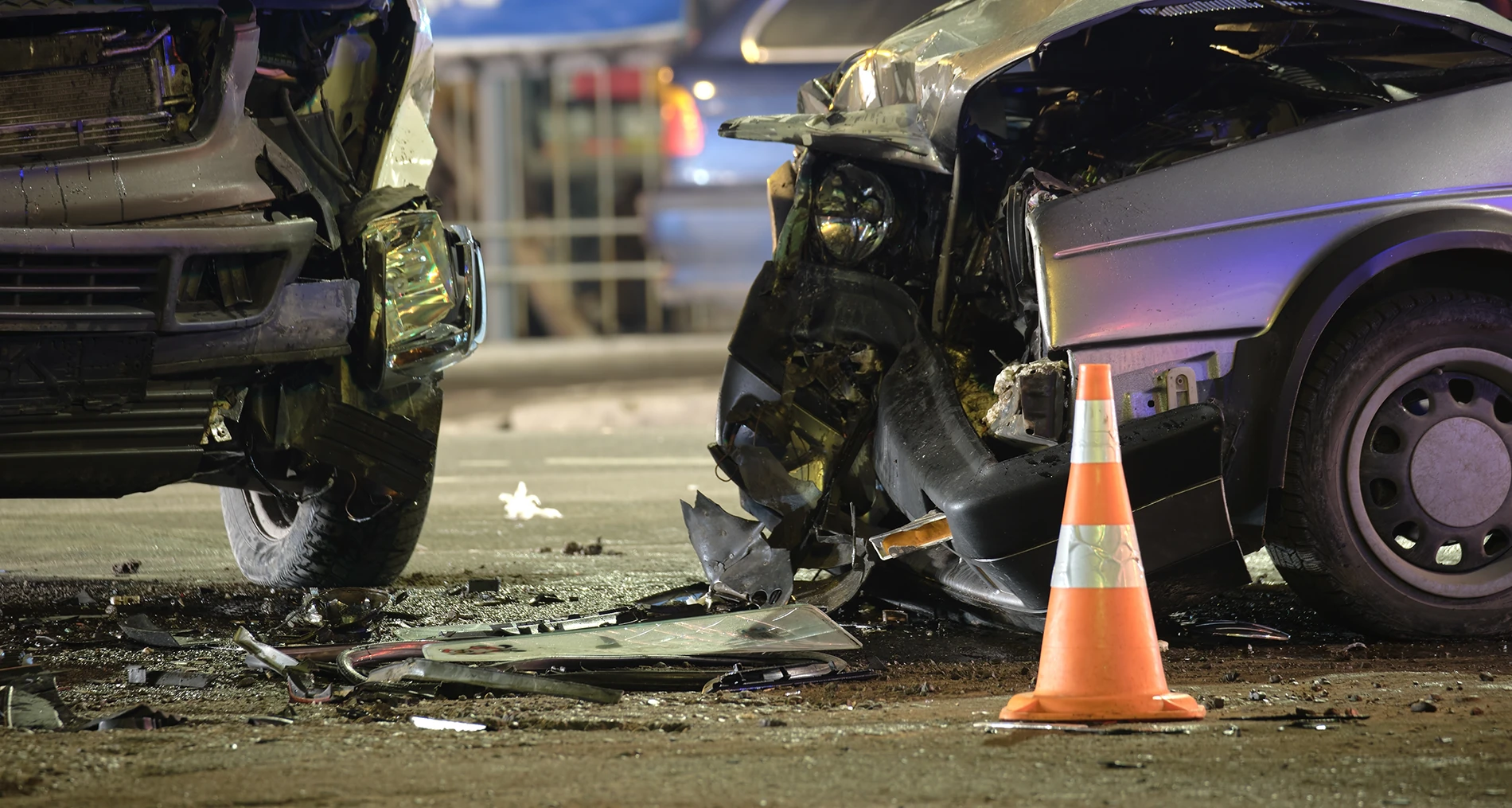
Car accidents. Most crash claims turn on negligence: whether a driver was speeding, distracted, drunk or otherwise impaired, or failed to yield. Fault can be shared between drivers, and both the at-fault driver’s liability coverage and your own policy can matter. Photos, the collision report and medical records often carry the claim. Learn more on our Anaheim car accident lawyer page.
Truck accidents. A crash with a commercial truck can involve more parties than an ordinary car crash: the driver, the motor carrier, and sometimes a shipper, loader or maintenance company. Our page on truck accident claims in Anaheim explains who may be responsible.
Motorcycle accidents. Riders have little protection in a collision, so injuries are often severe. Insurers sometimes argue that a rider’s speed, lane position or gear contributed to the harm. That is a shared-fault question, not an automatic bar to recovery. See our Anaheim motorcycle accident page.
Pedestrian and bicycle accidents. People on foot or on a bike can be badly hurt even in a low-speed collision. These claims often involve right-of-way rules, driver visibility and, when a road or sidewalk defect played a part, a public agency. Our California guides to pedestrian accident claims and bicycle accident claims cover the basics.
Rideshare accidents. Uber and Lyft claims depend on what the driver’s app showed at the moment of the crash. The insurance that applies differs depending on whether the driver was offline, waiting for a ride request or carrying a passenger. Passengers, other drivers and pedestrians can all have claims. Read more about rideshare accident claims in Anaheim.
Premises and Property Injuries
Slip and fall accidents. Owners and others who control a property must use reasonable care to keep it safe. A fall claim usually asks whether a dangerous condition existed, whether the owner knew or should have known about it, and whether it was repaired or warned about in time. Our Anaheim slip and fall page covers these claims in more depth.
Negligent security. When someone is assaulted on a property, the owner or operator may share responsibility if missing or inadequate security made a reasonably foreseeable crime easier to commit. Prior incidents and other facts carry a lot of weight in these cases. See our page on negligent security claims.
Dog bites. California’s dog bite statute, Civil Code § 3342, generally makes an owner liable when the dog bites someone in a public place or someone lawfully on private property, even if the dog had never been aggressive before. Injuries that don’t involve a bite, and claims against someone other than the owner, usually require proof of negligence or other theories. More on our Anaheim dog bite attorney page.
Defective Products
Product claims can be brought against companies in the chain of distribution, including manufacturers, distributors and sellers. California recognizes three main theories: a manufacturing defect, a design defect, and inadequate warnings or instructions. Each theory has separate elements, and defenses such as misuse or alteration can apply. Our article on the elements of a product liability claim explains them.
Work Injuries Caused by Someone Other Than Your Employer
Workers’ compensation is generally the only remedy against an employer for an on-the-job injury. A separate personal injury claim may exist against someone else whose negligence caused the harm, such as a driver, another contractor on a construction site, a property owner or an equipment maker. Our Anaheim work injury page covers those third-party claims.
Wrongful Death
When an accident is fatal, close family members and some dependents may have a wrongful death claim, and the estate may have a separate survival claim. The damages section below explains the difference. Our Anaheim wrongful death page covers who can file and how these cases proceed.
Serious Injuries in Accident Claims
Injuries in these cases range from sprains and fractures to harm that changes a person’s life for good. Common examples include:
- Broken bones
- Traumatic brain injuries (TBI)
- Spinal cord injuries
- Whiplash and other soft tissue injuries
- Internal injuries
- Burns
- Lacerations and scarring
Serious injuries raise their own questions about future care and lost earning capacity. Our pages on brain injury claims in Anaheim and Anaheim spinal cord injury claims go further, and our burn injury page covers claims involving burns.
Put your health and safety first after any accident. If you are hurt or have symptoms that concern you, get an appropriate medical evaluation. Treatment records also become evidence of the injury, and gaps or delays in care can lead an insurer to dispute what caused an injury or how serious it is.
How Shared Fault Affects a Claim
California follows “pure” comparative fault (Li v. Yellow Cab Co. (1975) 13 Cal.3d 804). If you were partly responsible for an accident, you can generally still recover, but your compensation is reduced by your share of the fault. A person found 20 percent at fault, for example, would generally recover 80 percent of their damages. Insurers often argue that the injured person carries more of the blame than the evidence shows, so the split is frequently disputed.
Filing Deadlines and Government Claims
Many California personal injury lawsuits must be filed within two years (Code of Civil Procedure § 335.1). That is a general rule, and it does not apply the same way in every case. The actual deadline can depend on when the claim accrued, whether the injury was discovered later, the injured person’s age, who the defendant is, the type of claim and other tolling rules. Evidence also fades with time, so early advice helps.
Claims Involving the City of Anaheim or Another Public Agency
Some Anaheim injuries involve a public entity: a city vehicle, a damaged road or sidewalk, an OCTA bus or county property. Before suing a public entity, you generally must present a written government claim to that agency, often within six months after the claim accrued (Gov. Code § 911.2). This is a claim-presentation requirement, not the deadline for filing a lawsuit. The City of Anaheim takes claims through its City Clerk’s office, and OCTA has its own claim form. Procedures differ by agency, and a late-claim application under Gov. Code § 911.4 may be possible in limited situations.
Evidence to Preserve After an Injury
Some evidence disappears within days. Records that often help include:
- Photos and video of the scene, your injuries and any property damage
- Names and contact information for witnesses
- Surveillance or dashcam footage, which is often recorded over
- Police or incident reports, where a report was made
- Medical records and bills
- Letters, emails and claim numbers from insurance companies
- Damaged property or products, kept in their current condition
- Pay stubs and other proof of lost income
- Receipts for out-of-pocket costs
Keep what you can lawfully collect. Don’t go back onto private property without permission or try to get records you aren’t entitled to; a lawyer can request those through proper channels. If Anaheim Police responded to a crash, the department’s Records Bureau handles report requests. Our guide to getting an Orange County accident report walks through the steps, and each service page above covers evidence specific to that type of claim.
Damages in a Personal Injury Claim
Compensation depends on the facts, the evidence of your losses, how fault is divided and the insurance available. Not every category applies in every case, but recoverable damages may include:
- Reasonable medical expenses, and future medical care where the evidence supports it
- Lost earnings
- Reduced ability to earn in the future
- Property damage, such as vehicle repairs
- Other economic losses and out-of-pocket costs
- Pain, suffering, emotional distress and other non-economic damages the law allows
When an Injury Is Fatal
Fatal cases work differently. A wrongful death claim belongs to eligible survivors and covers their own losses, such as lost financial support, funeral and burial costs, and the loss of the person’s love and companionship. A survival claim is brought for the estate and covers losses the person had before death, such as medical bills and lost earnings. For survival claims filed on or after January 1, 2026, California law generally does not allow recovery for the person’s pre-death pain and suffering (Code Civ. Proc. § 377.34).
Where Anaheim Civil Cases Are Handled
Civil cases arising in Anaheim are handled within the Orange County Superior Court system. The court lists its Central Justice Center in Santa Ana as handling limited and unlimited civil cases for all Orange County cities. The courthouse and judicial assignment for a particular case depend on the type of case, venue and the court’s assignment rules.
Working With Saeedian Law Group
Michael Saeedian, the firm’s founding attorney, has practiced law in California since 2009. Saeedian Law Group represents injured people and families in Anaheim from its offices in Beverly Hills, Rancho Cucamonga and Encino. You can review some of the firm’s past case results; past results do not guarantee a similar outcome in any other case.
When you contact the firm, an attorney can:
- Listen to what happened and answer questions about your claim
- Investigate the accident and gather evidence
- Handle communication and settlement negotiations with insurance companies
- File a lawsuit and take the case to court when that is the appropriate step
Attorney: Michael Saeedian, Esq., Founding Attorney — California State Bar #265470
Personal Injury Claims in Anaheim: Frequently Asked Questions (FAQs)
How Long Do I Have to File a Personal Injury Claim?
Many California personal injury lawsuits must be filed within two years under Code of Civil Procedure § 335.1, but the deadline can be shorter or longer depending on when the claim accrued, delayed discovery, the injured person’s age, who the defendant is and the type of claim. Claims against a public entity usually require a written government claim first, often within six months.
What if I Was Partially at Fault for the Accident in Anaheim?
You can generally still recover. California follows pure comparative fault, so your compensation is reduced by your percentage of responsibility. If you were found 20 percent at fault, you would generally recover 80 percent of your damages. How fault is divided depends on the evidence, and insurers often dispute it.
What if a City or Other Public Entity May Be Responsible?
Before you can sue a public entity such as the City of Anaheim, OCTA or the County of Orange, you generally must present a written claim to that agency, often within six months after the claim accrued (Gov. Code § 911.2). That is a claim-presentation step, not the lawsuit deadline, and each agency has its own form and process.
Should I Give the Other Party’s Insurer a Recorded Statement?
You are generally not required to give the other driver’s or property owner’s insurer a recorded statement just because an adjuster asks for one. That insurer represents the party you are claiming against, and your words can be used to dispute fault or the extent of your injuries. It is reasonable to talk with a lawyer before deciding.
What if My Own Insurer Asks Me for a Statement?
Your own policy is different. It likely requires you to report the accident, cooperate with the company and provide information about the loss. Those duties come from the terms of your policy, so the exact obligations vary, and refusing to cooperate can create coverage problems. A lawyer can review the policy and help you respond.
Should I See a Doctor After an Accident?
Your health comes first. If you are injured or have symptoms that worry you, get an appropriate medical evaluation. Medical treatment is not a legal requirement for a claim, but medical records are often the main evidence of an injury. Delays in care can lead an insurer to argue that the accident did not cause the injury or that it is less serious than claimed.
What Affects the Value of a Personal Injury Claim?
No single average fits every case. Value depends on factors such as the severity and permanence of the injury, past and future medical costs, lost income, how clearly the evidence shows fault, any share of fault assigned to the injured person, and the insurance coverage available.
What is a Demand Letter in a Personal Injury Case?
A demand letter is a written request to the at-fault party’s insurer. It describes the incident, the injuries, the treatment and the losses, and usually proposes an amount to resolve the claim. It is often sent once treatment has progressed far enough to document the losses. Sending a demand letter generally does not pause the deadline for filing a lawsuit.
Should I Accept a Personal Injury Settlement?
That depends on the offer and the facts. Before accepting, it helps to know the full extent of your injuries and future medical needs, because signing a release usually ends the claim. You can negotiate, turn down an offer or file a lawsuit. A personal injury lawyer can go over an offer with you before you decide.
Will My Anaheim Personal Injury Case Go to Trial?
There is no single answer. Many claims are resolved through negotiation, and some through mediation or after a lawsuit is filed. Others go to trial when the parties cannot agree on fault or value.
Does Saeedian Law Group Have an Office in Anaheim?
No. Saeedian Law Group does not have an office in Anaheim. Its offices are in Beverly Hills (headquarters, 9100 Wilshire Blvd., Suite 500W, Beverly Hills, CA 90212), Rancho Cucamonga (8916 San Bernardino Rd., Suite 110, Rancho Cucamonga, CA 91730) and Encino (15701 Ventura Blvd, Encino, CA 91436). The firm represents clients in Anaheim and throughout Orange County.
How Do Contingency Fees Work?
With a contingency fee, the lawyer’s fee is a percentage of the money recovered, and typically no attorney fee is owed if nothing is recovered. California requires the agreement to be in writing, to state the fee rate, to explain how case costs affect the fee and your recovery, and, for most injury cases, to state that the fee is not set by law and is negotiable (Bus. & Prof. Code § 6147).
Contact an Anaheim Personal Injury Lawyer for a Free Case Review
Saeedian Law Group takes personal injury cases from Anaheim and the rest of Orange County. If you were hurt and have questions about a claim, contact us for a free, no-obligation case review.