

Knowing what to do immediately after an auto accident is important, not only for your safety but also for protecting your legal rights and improving your chances of securing fair compensation. California Vehicle Code (CVC), section 20008 requires drivers to stop, exchange insurance information, and report certain accidents. Additional actions that can make a significant difference in your case include seeking medical attention, documenting vehicle damage, and avoiding admitting fault at the scene of the accident.
If you’ve been injured in a car crash, working with an experienced legal team can help you protect your rights and pursue the compensation you deserve. At Saeedian Law Group, our experienced personal injury attorneys assist victims with investigating accidents, handling insurance negotiations, and representing their interests when needed. Book a free consultation with our experienced car accident lawyers to better understand your options.
This guide provides a clear, step-by-step breakdown of what to do after a car accident in California, including legal obligations, documentation, dealing with insurance companies, and when to seek help from a personal injury attorney.
What You Should Do After a Car Accident in California
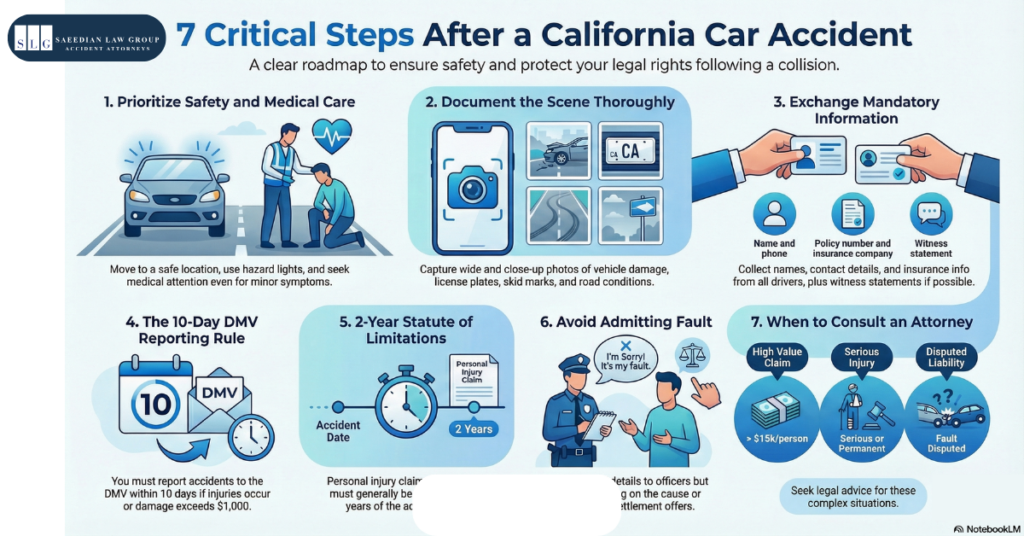
After a car accident in California, taking the right steps immediately can protect your safety and support your car accident claim. Below are the key things you should do in the event of a car accident.
1. Ensure Safety and Health
After a car accident, the first priority is to ensure safety and check whether anyone is injured. If possible, move to a safe location away from traffic to reduce the risk of another accident involving the motor vehicles at the scene. Also, turn on the hazard lights and use warning triangles, if available, to alert other drivers.
If anyone needs medical assistance, call 911 immediately and request emergency responders. Even if injuries appear minor, it is important to seek medical attention, as some conditions, including soft-tissue injuries and internal bleeding, may not show symptoms right away. Therefore, getting prompt medical attention helps protect your health and creates medical documentation that may be important for a personal injury claim or future medical expenses.
2. Contact Authorities
After a car accident in California, it is important to contact law enforcement so the incident is officially documented and supported for your car accident claim and insurance company process. Taking the right steps here helps protect your legal rights and ensures accurate reporting. To properly involve authorities, you should:
- Call the police to report the traffic accident and request assistance at the scene
- Obtain a police report, which is essential for any personal injury claim or legal process
- Provide clear and factual details to officers, and avoid admitting fault or speculating about the cause of the accident
3. Exchange Information
California laws require accident victims to exchange accurate details with the other party. This is necessary for any car accident claim and communication with your own insurance company. This helps ensure that all parties involved can be identified and contacted during the legal process.
So you should obtain names, contact information, and insurance information from all other drivers involved. In addition, collect vehicle details, including the make, model, and license plate number. It is also important to note the exact location and time of the accident for future reference.
How To Gather Evidence and Documentation After a Car Accident?

After a car accident in California, proper documentation helps establish what happened, identify the party responsible, and improve your chances of securing fair compensation. The more detailed your evidence, the harder it is for insurance adjusters to dispute your claim.
Photograph the Scene
One of the most important steps is to take clear photos of the accident scene. Capture wide shots showing all vehicles involved, as well as close-ups of vehicle damage from multiple angles. Make sure to photograph important details such as license plate numbers, skid marks, and any visible injuries.
You should also document surrounding factors, such as road signs, traffic signals, and weather conditions, as these can help explain how the accident occurred. These images serve as valuable evidence for your personal injury claim and provide an accurate record for future reference.
Collect Witness Statements
Witnesses can strengthen your car accident claim, especially when there is a dispute about how the accident happened. Their input can provide a neutral view of the accident scene and support your version of events.
If possible, identify and speak with anyone who witnessed the car accident. Ask what they observed and record their statements along with their contact details for future reference. Independent witnesses can help clarify what led to the crash, describe the actions of the other party, and support your personal injury claim with credible accounts.
Maintain Medical Records
After a car accident, keeping detailed medical records helps connect your injuries directly to the accident and supports your personal injury claim. Without proper documentation, it becomes harder to prove the extent of your injuries and related medical expenses. So, all injuries must be documented through medical evaluations and follow-up care.
Maintain copies of hospital visits, prescriptions, and treatment records, including receipts for all medical bills. These records demonstrate the impact of injuries and support claims for both current and future care. Clear medical documentation also strengthens the case when negotiating with insurance companies or pursuing compensation.
What Are the Legal Considerations After an Accident?

After a car accident in California, knowing what steps to take can help you navigate the insurance process and potential personal injury lawsuits effectively.
Understand Your Rights
If you are injured in a California car accident, you can pursue compensation for medical expenses, lost wages, property damage, and pain and suffering. California’s fault-based insurance system determines liability, which directly impacts potential recovery. Understanding these rights helps you make informed decisions about your claim and safeguards your legal interests.
Statute of Limitations
It is also important to be aware of the statute of limitations. In California, personal injury claims resulting from a car accident must be filed within two years from the date of the accident. Missing this deadline can prevent you from pursuing compensation for medical bills, lost wages, property damage, and pain and suffering. Filing on time is critical to protecting your legal rights and ensuring your case is heard in court.
Consult an Accident Attorney
Working with an experienced personal injury attorney after a car accident in California can make a significant difference in your claim. Attorneys help you navigate complex insurance procedures, ensure all damages are properly documented, and advocate for the highest possible compensation. They can handle negotiations, provide legal advice, and represent you in court if needed.
How To Deal With Insurance Companies?
Dealing with insurance companies after a car accident in California requires prompt action, careful documentation, and awareness of your rights under state law to maximize your claim. Here are some actions you can take to protect your interests.
1. Notify Your Insurance Provider
Contact your insurance company as soon as possible following the accident. Provide clear and detailed information about the crash, including the time, location, and parties involved. Keep a record of all communications with your insurer. Understanding your policy terms helps you know what damages are covered and ensures your claim proceeds smoothly.
2. Negotiating Claims
Negotiating a fair settlement after a California car accident requires strategy and careful documentation. Be cautious of initial offers from insurance companies, as they often undervalue your claim. Keep thorough records of medical bills, vehicle repairs, and lost income to support your case.
3. Avoid Common Pitfalls
After a California car accident, certain mistakes can lower your settlement or complicate your claim. Avoid admitting fault at the scene, as it may be used against you. Do not provide recorded statements without guidance from car accident lawyers, and be cautious before signing any settlement documents. Following these steps helps protect your rights and ensures fair compensation.
4. Know When to Get a Lawyer
Hire an accident attorney early, especially for serious injuries, disputes, or if your claim exceeds minimums ($15k/person injury, $30k/multiple, $5k property). Attorneys handle negotiations, evidence, and CDI complaints, and with the help of an experienced legal counsel, you can significantly boost settlements.
What Is The Personal Injury Lawsuit Process?

If a California car accident claim cannot be resolved through negotiation, pursuing a personal injury lawsuit may be necessary. This lawsuit can help victims seek fair compensation for medical expenses, lost wages, and other damages.
1. Filing a Lawsuit
To start a personal injury lawsuit in California, you must first gather all relevant documentation, including police reports, medical records, witness statements, and evidence of vehicle damage. Next, a formal complaint is filed with the appropriate court, officially initiating the legal action. Finally, the defendant must be properly served with legal notice, giving them an opportunity to respond within the court’s required timeframe.
2. Discovery Process
The discovery phase is a critical part of a California personal injury lawsuit, during which both parties exchange information to prepare for settlement or trial. This process often includes depositions, interrogatories, and document requests.
Discovery allows attorneys to verify facts, evaluate the strength of evidence, and identify any inconsistencies in the other party’s account. Properly handled, it builds a solid case and increases the likelihood of fair compensation.
3. Trial and Settlement
In California personal injury cases, many disputes are resolved through settlement negotiations before reaching trial. In fact, a study found that 92% of cases are resolved outside the courtroom, and this figure does not include cases that were never filed or resolved by other means.
Settlements allow parties to agree on a fair compensation amount without the time, expense, and uncertainty of court. If a case proceeds to trial, a judge or jury reviews the evidence and determines the outcome. Compensation can cover medical expenses, lost wages, property damage, and non-economic losses such as pain and suffering, depending on the severity of injuries and documented evidence.
Speak With an Experienced Car Accident Attorney Today!
Understanding what to do after a car accident in California can make a major difference in both your recovery and your ability to secure fair compensation. From ensuring safety at the scene and gathering evidence to notifying your insurance company and consulting a skilled attorney, following the right steps protects your legal rights and strengthens your claim.
If you’ve been involved in a car accident, working with experienced California car accident lawyers can make a real difference. At Saeedian Law Group, our team has spent over a decade helping victims navigate each step of the process and fight for fair compensation. We are ready to do the same. Schedule a free consultation today and have our skilled accident lawyers review your case.
FAQs About What to Do After a Car Accident in CA
Our attorneys at Saeedian Law Group have been handling car accident and personal injury cases for nearly two decades. Drawing from our extensive experience, we’ve provided clear answers to some of the most common questions people ask about what to do after a car accident in California.
How long do I have to report a car accident in California?
In sections 16000-16078 of the California Vehicle Code, you are required to report a car accident to the Department of Motor Vehicles (DMV) within 10 days if there are injuries or property damage over $1,000. Prompt reporting helps protect your legal rights and ensures accurate documentation for your insurance claim.
Do I need to file a police report after a car accident in California?
Yes, you should contact law enforcement if there are injuries, fatalities, or significant property damage. A police report provides an official record that supports your car accident claim and may be required by insurance companies.
What are the steps to follow after a car accident in California?
After a crash, ensure safety first, call 911 if needed, exchange information with other parties, document the scene, and contact your insurance company. Seeking medical attention and consulting a personal injury attorney can also protect your rights and help secure fair compensation.
How does fault affect car accident claims in California?
California follows a comparative fault system. So even if you are partially responsible, you can recover compensation. However, your settlement may be reduced proportionally to your percentage of fault, making proper documentation and legal guidance essential.
Where can I find a reputable car accident lawyer in California?
Look for attorneys with experience in California car accident cases and a proven track record in negotiating settlements and handling personal injury lawsuits. Saeedian Law Group provides expert guidance to help victims pursue fair compensation.

Michael Saeedian founded Saeedian Law Group in 2009 with the goal of providing injured individuals and their loved ones with caring, personalized, and attentive legal representation.