
If you’re injured in a store, you can hold the store liable if your injury was caused by a hazardous condition they knew about or should have known about and failed to fix or warn you in time. In California, premises liability law requires store owners to keep their property reasonably safe. If they are negligent and that negligence causes your injury, you may be able to recover compensation for medical bills, lost income, pain and suffering, and other damages.
At Saeedian Law Group, we’ve helped personal injury victims in California recover more than $100 million in compensation. With over 16 years of experience, our premises liability attorneys know how to investigate store accidents, prove negligence, and fight for the compensation you deserve. Schedule a free consultation with us today.
This blog explains when a store can be liable for customer injuries, common causes of store accidents, what to do after an injury, how to prove the store was at fault, how partial fault affects your claim, and the damages you may recover.
When Is a Store Liable for a Customer Injury?
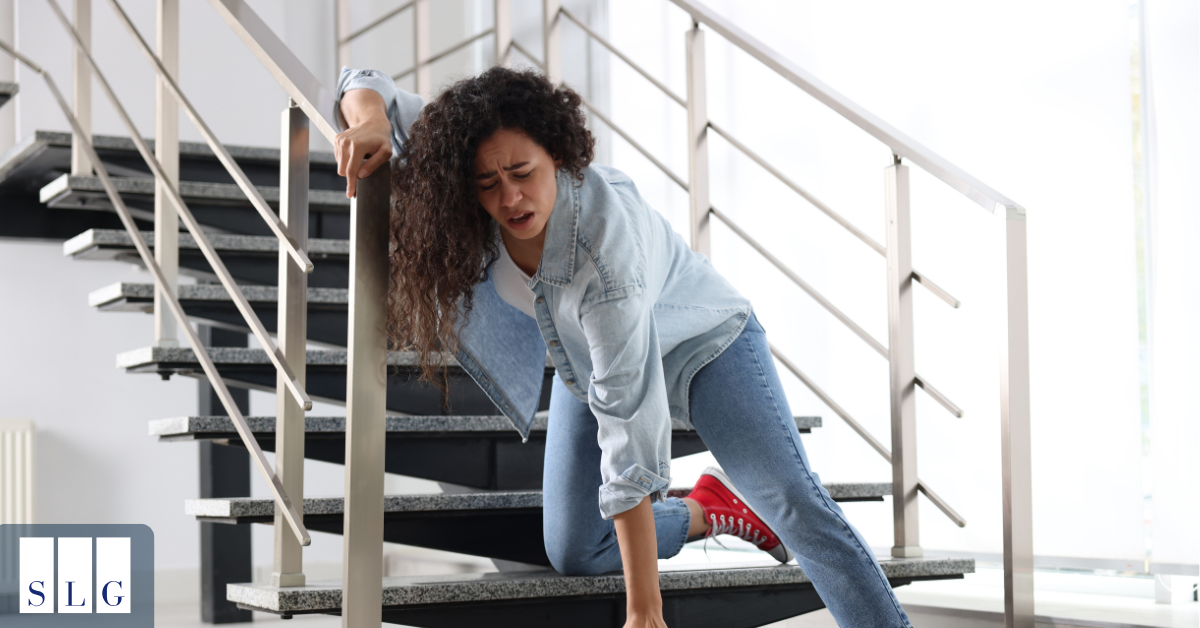
A store is liable for a customer’s injury when the injury was caused by a dangerous condition the store knew about, or should have known about, and failed to fix or warn customers in time. In legal terms, this is referred to as negligence. If you can prove the store’s negligence directly caused your injury, you may receive financial compensation for medical bills, lost wages, pain and suffering, and even out-of-pocket expenses.
For example, say there’s liquid spilled on the store floor for hours without being cleaned or marked with a warning sign. If you slip and fall and sustain serious injuries because of the spill, the store may be liable for damages. In such cases, you can seek fair compensation by filing a premises liability claim against the store.
What is Premises Liability?
Premises liability is a legal rule that holds property owners responsible when an individual sustains an injury due to unsafe conditions on their property. In California, premises liability is set out by the Section 1714 of the California Civil Code. The liability law makes it a legal duty for property owners to maintain a reasonably safe environment for visitors.
Therefore, if you’re hurt because of a hazard a store owner knew or should have known about, you can hold the store liable for your injuries. This type of claim applies to various types of property, including grocery stores, parking lots, apartment buildings, and even private homes.
To win a premises liability claim, you must prove that:
- There was a dangerous condition, otherwise known as hazard
- The store or property owner knew or should have known about it
- They failed to fix it or warn customers
- That hazard directly caused your injury
Examples of premises liability cases include slipping on a wet floor in a store, tripping over broken steps, being injured by falling merchandise, or suffering harm because of poor security. Therefore, property owners must regularly inspect the property, fix hazards, and post hazard warnings when needed.
Keep in mind that if the premises liability claim is against a government-owned property, such as a store in a city-owned building, you’d have to file a claim under the California Tort Claims Act (CTCA). That’s why it’s crucial to seek legal representation and guidance before taking any action.
Common Causes of Customer Injuries in Stores
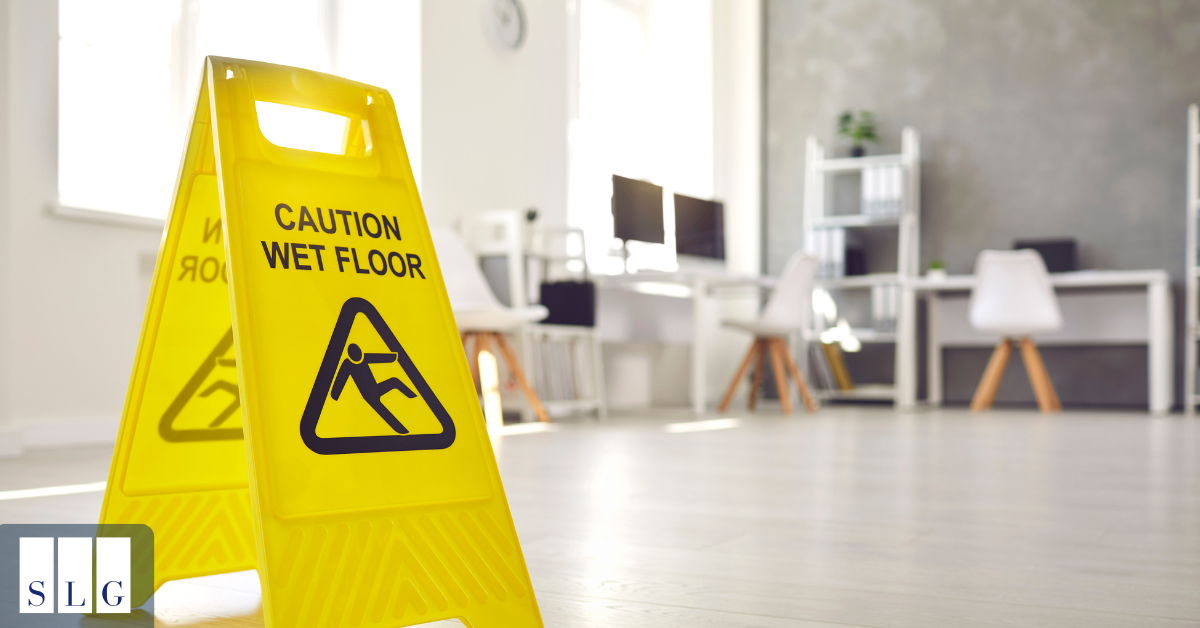
Customer injuries can occur in large retail stores, small shops, or even warehouse stores. However, understanding the most common causes can help customers stay alert and property owners take better precautions. Most store-related injuries occur due to:
- Slippery floors or spilled liquids leading to slip and fall accidents
- Poor lighting conditions
- Overloaded or poorly stacked shelves leading to falling merchandise
- Uneven flooring, loose rugs, broken steps, or torn carpets
- Lack of adequate security leading to injuries
- Failure to warn customers about hazards
When a Store Might Not Be Liable for Customer Injury
Even though you sustained injuries on store premises, the store might not be held liable for the injury if the following conditions apply:
- The hazard appeared moments before the accident, giving the store employees no reasonable chance to fix it or warn customers.
- The hazard is obvious and avoidable, such as a brightly marked step.
- The injury occurred in a space that is not owned, maintained, or managed by the store, such as a nearby public sidewalk.
- The store acted reasonably but still couldn’t prevent the accident
- The injury was caused by your own negligence.
What to Do if I Get Injured in a Store: 7 Important Steps
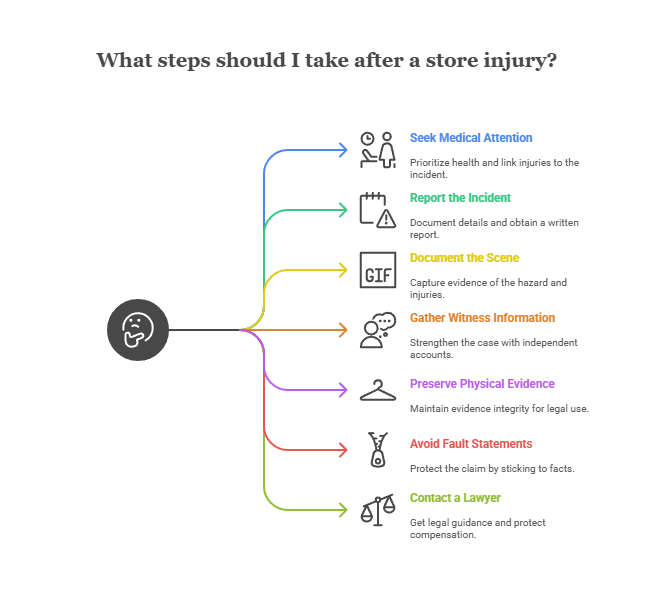
If you or your loved one get injured in a store, we recommend you act quickly to help preserve evidence and strengthen any potential claim you may file later. You can follow these steps:
- Seek medical attention immediately. Your health should always come first. Even if the injuries seem minor, see a doctor promptly, as some symptoms may appear hours or days later. Prompt treatment also helps link your injuries to the incident.
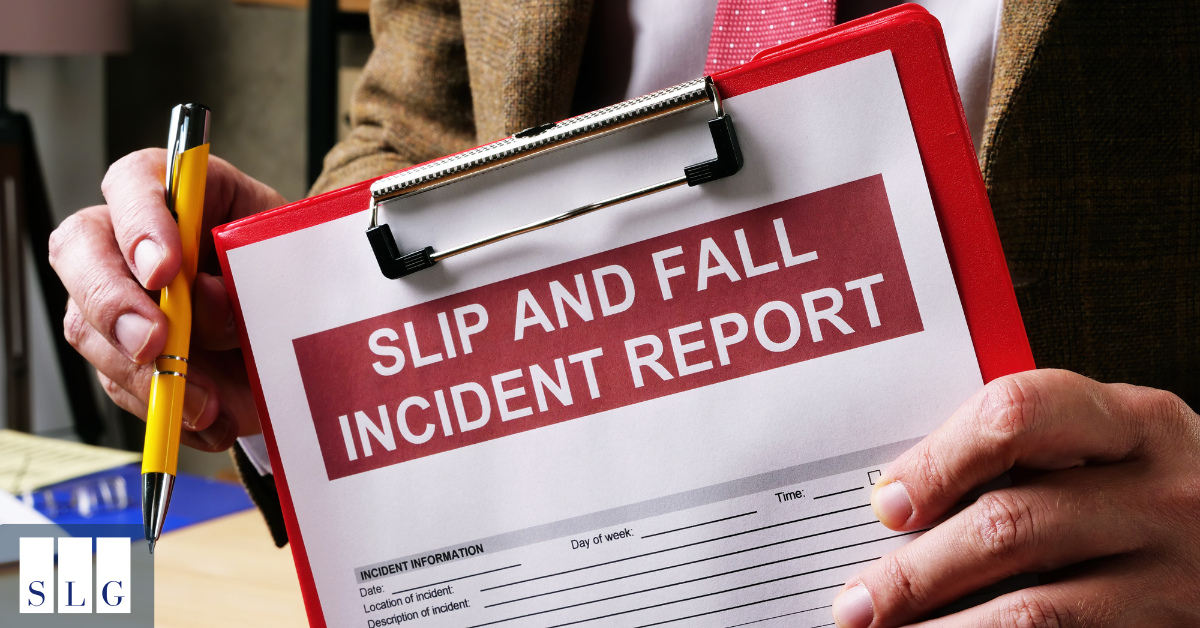
- Report the incident as soon as possible. Tell the store management or supervisor what happened and request a written incident report. Verify details like the time, the location, and a description of the hazard and the incident it caused. Then, ask for a copy for your records.
- Document the scene thoroughly. Conditions can change pretty fast, so capture the scene quickly. Take photos or videos of the hazard, your injuries, and the surrounding area. Be sure these pieces of evidence have a date-and-time stamp to establish when the danger existed.
- Gather evidence and witness information. If anyone saw the accident, politely get their names, phone numbers, and brief statements, if possible. You can ask what they saw and how long the hazard was present. This is helpful because independent witnesses strengthen your case.
- Preserve physical evidence. If possible, keep the clothes and shoes you wore that day, especially if they have signs of the accident like liquid or debris. Do not wash or alter them before speaking with a lawyer. You can also ask the store to preserve evidence. Request that they preserve video footage and maintenance logs. Make sure you send a written preservation letter as soon as possible. This helps prevent accidental deletion under routine retention policies.
- Avoid making statements about fault. Stick to the facts when talking to the store’s staff or their insurance company. Do not guess about causes, speed, or what others did. It might be best to decline recorded statements until you get legal advice because anything you say can be used to minimize your claim.
- Contact a personal injury lawyer. An experienced personal injury attorney can evaluate your case, calculate damages, and communicate with the store’s insurance company. They can also guide you through the claims process and protect you from tactics that may reduce your compensation. If you’re on a budget, look for a personal injury attorney who offers free initial consultation and works on contingency. Contingency fees mean that you don’t have to pay unless you win. You only pay if you recover compensation. That way, you don’t have to worry about upfront legal fees.
How to Prove the Store’s Liability
For most people, the next question after “when” is “how is a store liable for a customer injury”? This is because your premises liability claim against a store will be valid only if you’re able to prove the store’s liability. That’s why you need to know the basis upon which they can be held liable. Here are some steps you can follow to build a solid case.
First, you must show that a hazard existed at the time of the incident. To do this, you’ll need clear evidence in photos, videos, or detailed descriptions of the unsafe condition.
Secondly, you have to prove that the store knew or should have known about the hazard. You can show actual notice if staff admit they saw the hazard. On the other hand, you can rely on constructive notice if the hazard was there long enough that a reasonable store would have discovered it. You can obtain their cleaning logs, maintenance schedules, or witness statements to support your claim.
Thirdly, you must show that the store failed to take reasonable actions to fix the hazard. Your evidence could be the absence of warning signs, no attempt to clean up, or repairs that were delayed without good reason. Security camera footage is especially powerful for proving inaction.
Next, you must prove that the hazard directly caused your injury. Obtaining video evidence via surveillance footage can strengthen your claims.You might also have to provide medical records that confirm that the type and timing of the injury correspond with the accident. Hence, we recommend seeking immediate medical treatment as it helps show the injury was directly caused by the dangerous condition, not something unrelated.
Moreover, you have to show your damages. This includes medical bills, proof of lost wages, and evidence of pain and suffering. A thorough record of your symptoms and how the injury affects your daily life can also strengthen this aspect of your claim. When these elements are clearly established with credible evidence, your liability attorney can build a persuasive claim that the store or property owner’s negligence caused your injuries.
What if I Was Partially at Fault for My Injury?
California applies pure comparative negligence. This means that even if you’re mostly responsible for your own injury, you can still get compensated for the portion caused by the store’s negligence. Partial fault only reduces the liability, but does not completely exonerate the property owner.
That is to say that if you are 90% at fault and the store is 10% at fault, you can still recover 10% of your damages. Meanwhile, the judge determines the percentage of fault for each party, and damages are adjusted accordingly.
For example, say you sustained severe injuries in a slip and fall accident caused by a wet floor in a store, but you were also running and not paying attention. Assume the jury assigns you 40% fault and assigns the store 60%. If the total damages are valued at $100,000, you’ll still receive $60,000 after your 40% fault share has been deducted.
Can You Sue a Store After an Injury?
Yes, you can sue a store after an injury if you can show that the store’s negligence caused your harm. But before filing a lawsuit, you should begin with an insurance claim against the store’s liability coverage. If they’re willing to settle out of court, you can negotiate a just compensation based on the extent of damages.
On the other hand, if the store or its insurer refuses to offer a fair settlement, you can file a personal injury lawsuit in court. It’s important to act quickly because each state has a strict deadline for filing your case, known as the statute of limitations.
In California, the statute of limitations for personal injury cases is two years from the date of the injury. This means you generally have two years to file a lawsuit. If the claim is under the CTCA, you have six months to file a government claim before you can sue.
This deadline applies to most negligence-based personal injury claims, such as slip-and-fall accidents, trip hazards, or store injury. If you miss this deadline, you’ll lose your right to sue. Because these time limits are strict, it’s best to speak with a personal injury attorney as soon as possible after an accident.
Damages You May Recover After a Store Injury
It’s not enough to know that you can sue a store in a personal injury case. You must also understand the types of damages you can recover so that you can file for maximum compensation. Such damages include the following:
- Medical Expenses: You can recover the cost of treatment directly related to your injury. It can include emergency room visits, hospital stays, surgeries, physical therapy, prescription medications, and any necessary medical equipment. Depending on how long the case lasts, you may also recover future medical bills for ongoing care.
- Lost wages: If you were forced to miss work because of the injury, your compensation can cover the income you lost during recovery. In addition, you may also claim loss of earning capacity if your injury limits your ability to work in the future.
- Pain and suffering: Your compensation may also cover the physical pain and emotional distress caused by the injury. It can include ongoing discomfort, anxiety, depression, and the loss of enjoyment in daily activities.
- Property damage: If the accident also damaged your personal belongings, such as a phone, glasses, or clothing, you may be able to recover the cost of repair or replacement.
- Punitive damages: In rare cases involving reckless or intentional conduct, the court may award punitive damages. The goal is to punish the wrongdoer and deter similar behavior in the future.
Remember that each case is unique, and the damages you may recover depend on how severe your injury is, the evidence available, and the laws in your state. To get maximum compensation, it’s best to consult a premises liability lawyer who understands the personal injury laws in your jurisdiction, especially for store liability.
Ready to Recover the Compensation You Deserve?
A store injury can leave you facing medical bills, lost income, and uncertainty about your future. Although you can file for compensation under California’s premises liability laws, proving the store’s negligence requires evidence, strong legal arguments, and quick action before the statute of limitations runs out. Hence, it’s best to work with an experienced personal injury lawyer to protect your rights and maximize compensation.
If you were hurt in a store due to unsafe conditions, don’t try to handle the legal process alone. Our personal injury attorneys at Saeedian Law Group have the experience and track record to fight for the compensation you deserve. Contact us today for a free consultation and let our skilled attorneys guide you every step of the way.
FAQs
At Saeedian Law Group, our attorneys have been handling personal injury cases for the past 16+ years. From our years of experience, we’ve compiled comprehensive answers to the most common questions people ask about premises liability claims against a store.
How to File an Injury Claim Against a Business
Start by reporting the incident to the store manager and documenting the hazard. Then, contact a personal injury or premises liability lawyer to file a claim with the business’s insurance company, supported by your evidence and medical records.
How Long Do I Have to File a Lawsuit Against a Store?
In California, you generally have two years from the date of injury to file a lawsuit. If the store is a government-owned property, you have six months to file a government claim under the CTCA before you can sue. Missing this deadline usually means you lose the right to seek compensation.
What if the Store Claims the Injury Was My Fault?
If the store blames you, your attorney can present evidence showing the hazard was the primary cause. California’s pure comparative negligence law can still allow recovery, but your compensation may be reduced.
Can I Sue if There Were No Warning Signs?
Yes, if the store failed to place clear warning signs for a known hazard, that can be evidence of negligence. The absence of warnings often strengthens your case.
Is the Store Liable for Negligence if the Shopper Later Sues?
If the shopper can prove the store’s negligence caused their injury, the store may be liable. This is true whether the case settles out of court or proceeds to trial.
How Much Compensation Do You Get for a Fall in a Supermarket?
Compensation varies based on medical costs, lost wages, pain and suffering, and other damages. Severe injuries typically result in higher compensation.
What to Do if You Get Injured in a Supermarket?
Seek immediate medical attention, report the incident to the supermarket’s management, and document the scene. Then, contact a lawyer before filing a personal injury claim.
What Type of Insurance Would Cover a Customer’s Injury?
Most businesses carry general liability insurance, which covers customer injury claims. This insurance typically covers medical bills, lost wages, and other proven damages.

Michael Saeedian founded Saeedian Law Group in 2009 with the goal of providing injured individuals and their loved ones with caring, personalized, and attentive legal representation.