

A dog bite expert witness is a professional who helps the court understand why a dog bite attack occurred and who is responsible. Being attacked by a dog leaves you with injuries, mounting medical bills, and an owner who insists their dog has never done this before. These experts analyze the dog’s behavior, the owner’s actions, and the circumstances surrounding the bite to provide clear, fact-based testimony. Their expertise can clarify complex evidence, such as medical records and behavioral patterns, making it easier to prove negligence.
At Saeedian Law Group, we’ve helped personal injury victims in California recover more than $12 million in compensation. If you’ve been bitten or attacked by a dog, our dog bite attorneys with over 16 years of experience are ready to help you investigate the incident, prove owner negligence, and fight for the full compensation you deserve. Contact us today for a free case review.
This blog explains what dog bite expert witnesses are, their roles and responsibilities, why you need them in your dog bite claim, and what to do after a dog bite incident.
What is a Dog Bite Expert Witness?
A dog bite expert witness is a professional who provides specialized knowledge and testimony in legal cases involving dog bites or attacks. Their role is to help the court understand technical aspects of dog behavior, breed tendencies, training practices, owner responsibility, and the circumstances that led to the incident.
These experts may include animal behaviorists, veterinarians, canine behavior experts, or public safety specialists with deep experience in dog aggression and handling. They review evidence such as veterinary records, photos, and witness statements to assess whether the dog acted out of provocation, poor training, negligence, or other liable reasons.
In court, a dog bite expert witness may testify on liability, causation, and prevention. Their testimonies help judges or juries make informed decisions about fault, compensation, or future restrictions for the animal. Moreover, their insights often strengthen a case, whether for the victim or the dog’s owner, by clarifying complex behavioral or safety issues.
Roles and Responsibilities of a Dog Bite Expert Witness
A dog bite expert witness plays a crucial role in helping the court understand what caused a dog attack and who may be responsible.
The first task is evaluating the dog’s behavior. The expert studies the dog’s temperament, body language, and past behavior to determine why the bite happened. For example, they may explain whether the dog acted out of fear, pain, or aggression common to certain breeds like pit bulls, police dogs, or German shepherds.
From there, the expert assesses the owner’s actions. They examine how the owner handled or controlled the dog before the attack. This includes reviewing leash use, fencing, training, and whether the owner ignored prior knowledge of danger, warnings, or complaints. The goal is to see if the owner acted responsibly or negligently.
Analyzing the evidence comes next. Dog bite experts review photos, videos, medical reports, and witness statements to understand the full context of the incident. They might also reconstruct the event to show what likely triggered the bite or how it could have been prevented.
The expert also has to explain complex information in court. One of their key responsibilities is to translate technical or behavioral details into simple terms that judges and juries can understand. For example, they might explain how certain behaviors, like raised hackles or growling, show a dog’s intent or level of threat.
Alongside that, they collaborate with legal and medical teams. Dog bite experts often work with lawyers, doctors, police officers, or animal control officers to ensure all evidence is properly interpreted. Their insight can help link the attack to specific injuries or identify violations of local leash or safety laws.
Underneath all of it sits the obligation to provide objective testimony. Whether hired by the victim or the defense, they must focus on the truth, not on supporting one side. This objectivity strengthens their credibility and the overall fairness of the case.
Expert Witnesses Typically Called in Dog Bite Cases
In dog bite cases, various types of expert witnesses may be called to provide professional insight into different aspects of the incident. They may also be summoned to provide expert witness testimony at a deposition or trial. Together, these experts help the court form a complete picture of what happened, why it happened, and who bears legal responsibility.
Because each expert answers a different question, it helps to see side by side what each one examines and what their testimony is meant to establish. The table below compares the six types most often retained in dog bite claims.
| Type of expert | What they examine | What their testimony helps establish |
| Animal behaviorist or canine behavior expert | Temperament, triggers, prior aggression, socialization and handling history | Whether the attack was predictable, provoked, or the product of poor handling |
| Veterinarian | Health and vaccination records, pain conditions, hormonal or neurological issues | Medical explanations for the behavior, and the victim’s infection or disease exposure |
| Dog trainer or handler | Obedience level, training records, containment and control measures | Whether the owner took reasonable steps to control and socialize the dog |
| Medical expert | Wound severity, treatment course, scarring, nerve damage, psychological effects | The full extent of the injuries and the cost of future care |
| Animal control or public safety official | Local leash laws, prior complaints, citations, quarantine records | Whether the owner violated municipal or state animal control rules |
| Forensic or liability expert | Bite patterns, scene photographs, physical evidence, property conditions | A reconstruction of the incident and an allocation of fault |
Animal Behaviorists or Canine Behavior Experts
These professionals analyze the dog’s temperament, triggers, history of aggression, and other information on animal behavior. They help determine whether the dog’s actions were predictable, provoked, or due to poor handling or training.
Veterinarians
Experts in veterinary medicine provide medical insights into the dog’s health and vaccination records. They help identify and explain any medical conditions that could have influenced its behavior (such as pain, illness, or hormonal issues). They may also assess the victim’s risk of infection or disease from the bite.
Dog Trainers or Handlers
Certified trainers or handlers testify about dog training practices, obedience levels, and whether the owner took reasonable steps to control or socialize the dog. Their input helps evaluate the owner’s responsibility or negligence.
Medical Experts
Doctors, surgeons, or board-certified plastic surgeons distinctly experienced in dog cases testify about the victim’s injuries and treatment. They also assess the recovery process and long-term physical or psychological effects, such as scarring or trauma.
Animal Control or Public Safety Officials
These experts explain local leash laws, prior complaints, or safety regulations, clarifying whether the dog’s owner violated municipal or state animal control rules.
Forensic or Liability Experts
In complex cases, forensic specialists or liability experts may analyze evidence such as bite patterns, scene photos, or owner negligence to reconstruct the event and determine fault.
Why a Dog Bite Expert Witness Matters in Your Dog Bite Claim
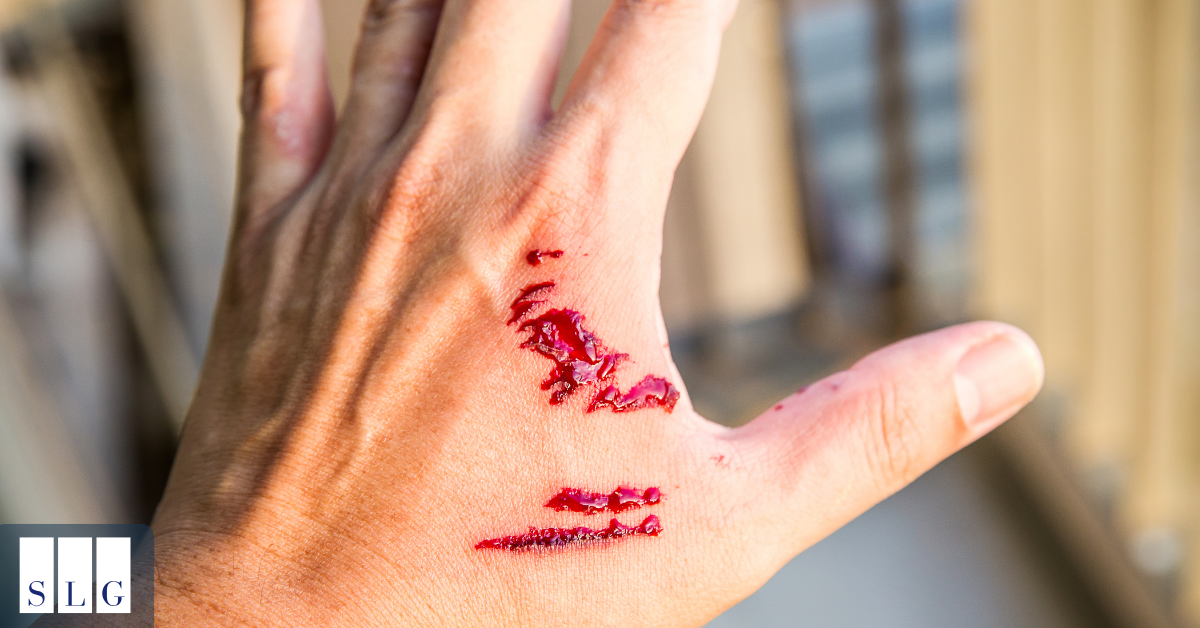
Having a dog bite expert witness on your side can make a major difference in the outcome of your claim. Their expert witness services bring clarity and credibility to situations where the facts may be disputed or unclear
Dog bite cases often involve conflicting stories. For example, an owner may claim their dog was provoked, while the victim insists otherwise. In such cases, an expert witness brings clarity to the situation by providing an unbiased, science-based explanation of what likely happened. That way, the court understands the behavior of the dog and the responsibility of the owner.
“The cases that turn on an expert are usually the ones where the owner says the dog was provoked and there is no video,” says Michael Saeedian, Founding Attorney at Saeedian Law Group. “A behaviorist who can read the bite pattern, the dog’s history, and the layout of the property gives a jury something to weigh besides two people contradicting each other.”
A qualified expert also strengthens your claim by identifying signs of negligence or poor handling that may not be obvious to non-experts. For example, they can show that a dog had a history of canine aggression or that the owner failed to follow California’s leash or control laws. Such insights can turn uncertain or circumstantial evidence into solid proof of liability.
In addition, they can explain whether the attack and animal bite could have been prevented with proper training or precautions. And this detail often plays a key role in determining fault and compensation or settlement amount. Beyond proving who is responsible, dog bite expert witnesses help establish the full impact of the attack on the victim. They can connect the incident to both physical injuries and emotional distress, such as anxiety or fear around animals after the bite.
By translating complex behavioral and medical information into clear, factual testimony, the expert makes your claim more persuasive and credible. Overall, having an objective, professional testimony from a qualified dog expert adds weight to your side of the story and can significantly influence the superior court’s decision or settlement outcome.
Legal and Ethical Standards for Dog Bite Expert Witnesses
Dog bite expert witnesses must follow strict legal and ethical standards because their opinions can strongly influence a case. Their main responsibility is to help the court understand the facts by using their professional knowledge and extensive experience of dog behavior, veterinary science, or safety practices. Therefore, they must remain completely objective and avoid any bias toward the party that hires them.
The standard their testimony has to meet depends on which court hears the case. Most California dog bite claims are filed in state court, where expert testimony is governed by the California Evidence Code rather than the federal rules. Evidence Code section 720 permits a witness to testify as an expert only if they hold the special knowledge, skill, experience, training, or education the subject requires.
Section 801 limits opinion testimony to subjects beyond common experience that rest on material an expert would reasonably rely on. Rule 702 of the Federal Rules of Evidence sets a parallel reliability standard, but it applies only in the smaller number of dog bite cases heard in federal court.
Under either standard, testimony in dog bite cases should be based solely on evidence, such as medical records, bite patterns, and behavioral analysis, rather than personal opinions or assumptions. Any sign of bias or exaggeration can damage their credibility and weaken the case.
To qualify, an expert witness needs proper training, education, and experience in their field. They must also be transparent about their qualifications and any potential conflicts of interest, and acknowledge any limits to their findings. If an expert gives misleading or speculative testimony, they could be disqualified or face legal consequences.
Expert witnesses in dog bite cases must also maintain the right ethics and professionalism. They must handle all sensitive information with confidentiality, respecting the privacy of both victims and defendants. Their role is not to advocate for a side but to help the court reach a fair, informed decision. By maintaining honesty, professionalism, and respect for the judicial process, these experts ensure that their testimony supports justice and helps resolve dog bite cases fairly and accurately.
What Additional Evidence Do You Need for a Dog Bite Claim?
In addition to expert testimony, building a strong dog bite claim requires solid evidence that clearly shows what happened, who was responsible, and how the attack affected you. The more detailed and organized your evidence, the stronger your case will be. The major types of supporting evidence you’ll need are:
Medical records and bills are the foundation. These documents prove the extent of your injuries, treatments received, and associated costs. They also show how the dog bite impacted your physical health and recovery timeline.
Photographs and videos do what words cannot. Clear images of the bite wounds, scarring, torn clothing, and the scene of the attack help visually establish what happened. If possible, include photos taken immediately after the incident and during recovery.
Eyewitness Statements and testimonies from people who saw the attack or its aftermath can confirm your version of events and show whether the dog had a history of aggressive behavior.
Animal control or police reports carry particular weight because they are official records from authorities and often include valuable details such as prior complaints, citations, or confirmation that the dog was not properly restrained.
Proof of ownership and dog history matters when an owner denies the animal was theirs, and vet records, adoption papers, or prior incident reports can link the dog to the owner and demonstrate a pattern of aggression or negligence.
If the attack caused you to miss work or lose wages, employment and income records – If the attack caused you to miss work or lose wages, documents such as pay stubs, employer letters, or medical leave forms help establish your financial losses.
What To Do After a Dog Bite in California
If you’ve been bitten by a dog in California, taking the right steps immediately after the incident can protect your health, your rights, and your ability to file a successful claim. California follows a strict liability rule (under the Civil Code Section 3342), meaning dog owners are generally responsible for bites that happen in public or when the victim is lawfully on private property. Here are the five most important steps to take after a dog bite.
1. Get Immediate Medical Treatment
Even small bites can lead to infections, nerve damage, or scarring. Clean the wound right away, then visit a doctor or emergency room for proper care. You should request copies of all medical reports and bills as they serve as crucial evidence in your personal injury claim and document the severity of your injuries.
2. Identify the Dog and Its Owner
Find out who owns the dog and gather details such as their name, address, and contact information. Ask for proof of the dog’s vaccination history, especially for rabies. If the owner is unknown or the dog is a stray, contact local animal control immediately so they can locate the animal and assess the risk of disease.
3. Report the Bite to Authorities
File an official report with Animal Control or the police in your county. This creates a legal record of the attack and initiates an investigation into the dog’s history of aggression or prior complaints. The report also helps establish accountability if you file a claim later.
4. Collect and Preserve Evidence
Take detailed photos of your injuries, the dog, the scene, and any torn or bloodied clothing. Gather contact information from witnesses and keep copies of all documents, including medical records, incident reports, and communication with the dog’s owner. These records will help prove liability, damages, and emotional distress.
5. Consult a California Dog Bite Attorney
Before talking to insurance adjusters or signing any personal injury settlement offer, it’s best to speak with an experienced dog bite lawyer experienced in California dog bite cases. The attorney can help you understand your rights under strict liability laws, calculate full compensation for medical bills and lost wages, and represent your best interests in negotiations or court.
The deadline matters here as well. Under Code of Civil Procedure section 335.1, you generally have two years from the date of the bite to file a personal injury lawsuit in California, and claims against a city, county, or other public entity carry a much shorter notice requirement.
Need Help Proving Negligence After a Dog Attack?
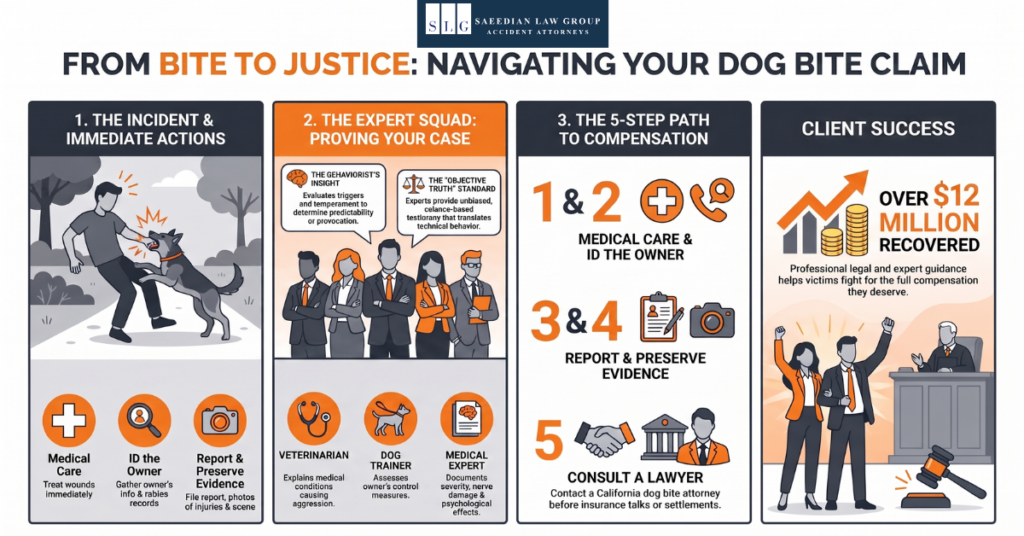
Working with an expert witness can strengthen your dog bite case by clarifying both the dog’s behavior and the owner’s responsibility. As mentioned in this blog, they help prove negligence, which helps maximize your potential compensation. After a dog bite, it’s important to act quickly: seek immediate medical care, document your injuries, collect evidence, and identify the dog and its owner. Above all, work with an experienced dog bite lawyer to ensure proper legal representation and guidance.
If you were a victim of a dog bite attack, our Los Angeles dog bite lawyers at Saeedian Law Group can guide you through every step of the process. We connect you with trusted experts, preserve critical evidence, and aggressively pursue the full compensation you deserve. Schedule a free consultation with us today.
FAQs
Dog bite cases often raise many questions about legal rights, owner liability, and the compensation you may be entitled to. Below are some of the most common questions people ask when pursuing a dog bite injury claim in California.
What Defenses Do Dog Owners Use in Dog Bite Cases?
Dog owners often claim that the victim provoked the dog, trespassed on private property, or was aware of the dog’s aggressive nature but approached anyway. In some cases, they may argue that the victim assumed the risk or that another person was responsible for controlling the dog at the time of the attack. If you or your loved one has been bitten by a dog, you need an experienced dog bite lawyer to navigate these defenses.
What Compensation Can You Receive for a Dog Bite Injury?
Victims of dog bites can receive compensation for medical expenses, lost wages, pain and suffering, and emotional distress. In severe cases involving long-term injuries or scarring, victims may also recover costs for future medical care, therapy, or reconstructive surgery.
How Do You File a Dog Bite Injury Claim?
To file a dog bite claim in California, you’ll need to gather evidence such as medical records, photos, witness statements, and the dog owner’s information. You can file the claim through the owner’s homeowner’s insurance or directly with the help of a personal injury attorney who will handle negotiations and, if needed, a court case.
How Long Do You Have to File a Dog Bite Claim?
In California, you generally have from the date of the dog bite to file a personal injury claim. This is the California statute of limitations for personal injury cases. If you miss this deadline, you may lose your right to seek compensation, so it’s best to take action as soon as possible after the incident.
What Is an Average Settlement for a Dog Bite?
The settlement amount depends on factors like the severity of the injuries, medical costs, emotional impact, and whether the dog had a history of aggression. According to Triple I, the average cost per dog bite claim in the U.S. was $69,272 in 2024. In California, the average is $86,229. Remember that the exact settlement amount depends on the specifics of your case, so make sure to speak with your lawyer.
Legal disclaimer: This article is provided for general informational purposes only and does not constitute legal advice. Reading it does not create an attorney-client relationship with Saeedian Law Group. Crash statistics cited reflect the reporting years indicated and may change as data is updated. Prior results do not guarantee or predict a similar outcome in any other matter, and every case depends on its own facts. Consult a licensed California attorney about your situation. This content is published by Saeedian Law Group, a California law firm with an office in Beverly Hills, California.

Michael Saeedian founded Saeedian Law Group in 2009 with the goal of providing injured individuals and their loved ones with caring, personalized, and attentive legal representation.