Fontana Truck Accident Lawyer
A truck driver says the brakes failed. A carrier produces an inspection sticker. Neither statement, by itself, explains why a collision happened. An equipment-related injury claim needs a timeline: the condition before the crash, reported defects, inspection and repair work, and the condition afterward.
Saeedian Law Group evaluates truck injury cases involving Fontana and the surrounding area. We can discuss whether vehicle condition, driving conduct, or another factor needs investigation. Request a free consultation or call (310) 288-3000. The firm publishes offices in Beverly Hills, Rancho Cucamonga and Encino, not Fontana. Our Rancho Cucamonga office is at 8916 San Bernardino Road, Suite 110; ask about appointment arrangements before traveling.
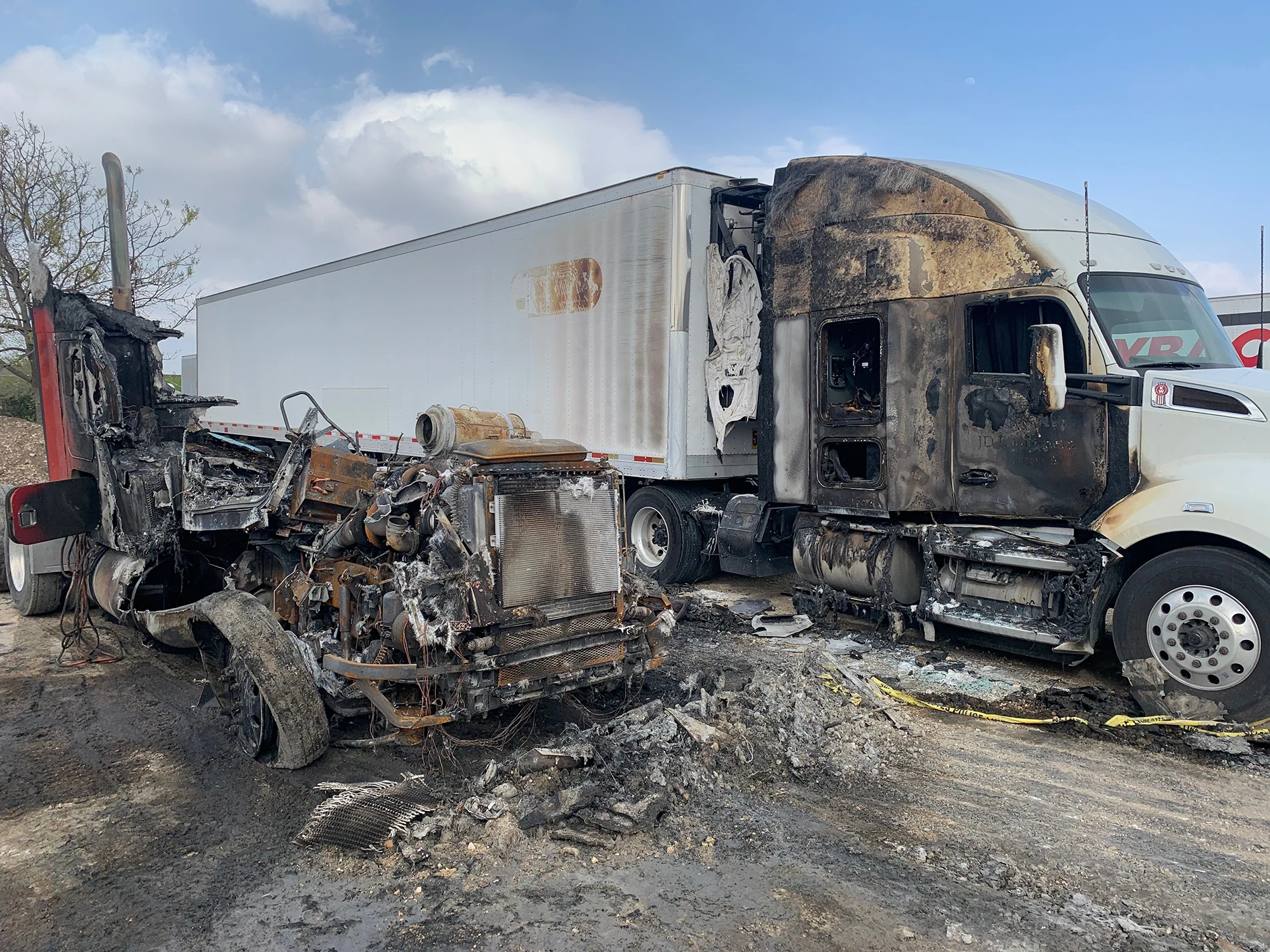
Preserve the equipment question before repair changes the evidence
Emergency assistance and necessary medical care come first. Do not approach damaged equipment, move debris in traffic, or attempt a truck inspection yourself. If safe and lawful, keep photographs of the vehicles, wheels, visible damage, roadway marks and debris. Record the tractor and trailer plates and unit numbers separately.
Tell counsel promptly if a truck, trailer, tire or other component is about to be repaired, discarded or transferred. A qualified inspection may be useful when the evidence supports a mechanical concern, but access and testing must be arranged lawfully. Ownership, possession, consent, insurance arrangements and court procedures can affect what can be done. A preservation letter is not permission to take parts or download a vehicle's systems.
The question is not simply whether something broke. A component may have failed before impact, been damaged by the collision, or have no meaningful connection to it. An investigation may need to compare physical evidence with driver statements, work orders, inspection findings and available vehicle data. Do not assume a defect from the severity of the crash or an insurer's description alone.
An inspection sticker is not the whole maintenance history
For covered operations, 49 CFR section 396.3 addresses systematic inspection, repair and maintenance. Its record provisions include vehicle identification, scheduled maintenance information, and dates and nature of inspection or repair work, subject to the rule's scope and control requirements.
The federal periodic inspection rule addresses covered vehicles and the preceding 12-month inspection period. For a combination, the rule treats the tractor and trailers as separate vehicles requiring inspection. A passing inspection at an earlier date does not answer whether a later defect developed, was reported, or was corrected before the collision.
Records worth evaluating may include defect reports, repair invoices, inspection reports, out-of-service information and the identity of a maintenance provider. Those are possible sources, not a promise that every record exists or is publicly available. A carrier's regulatory history is also different from proof of a defect on the particular truck at the particular time.
The federal rules do not apply identically to every commercial-looking vehicle. Vehicle characteristics, the operation and applicable exceptions matter. California requirements must be checked too rather than assuming either that federal law covers everything or that a local trip is unregulated.
California's BIT program does not put every truck on the same inspection schedule
CHP's Basic Inspection of Terminals program concerns motor-carrier safety compliance. A terminal inspection and the police investigation of an individual collision have different purposes. A terminal may be somewhere other than the crash city, and the carrier or repair business may hold records outside Fontana.
For specified covered vehicles and operations, Vehicle Code section 34505.5 requires inspections at least every 90 days, with exemptions and an out-of-service provision. It identifies inspection subjects including brakes, steering, suspension, tires, wheels and connecting devices, and requires retention of covered inspection records for two years. The statute also contains rules for interstate vehicles not physically based in California.
Those requirements should not be applied from an old checklist without checking the vehicle category. A CHP bulletin dated February 11, 2025 explains the removal of motortrucks identified under section 34500(j) from the BIT program and its 90-day periodic inspection requirement effective January 1, 2025. It also explains that other safety, maintenance and recordkeeping obligations remain. Whether a specific truck falls within that change or another regulated category requires review.
Neither a satisfactory terminal rating nor an alleged inspection violation decides a civil injury claim. The relevant duty, conduct, causation, injury and defenses still need evidence. A record-retention period is not a reason to delay a request, and it is not a universal retention rule for dash cameras or vehicle computers.
Locate the crash precisely, including which side of a boundary it occurred on
The City's published local truck-route map shows the street and freeway network around I-10, I-15 and SR-210, along with city limits and neighboring communities. That particular document bears a January 2017 revision date and an older route legend; do not use it alone to decide today's legal truck route or a restriction on the crash date.
For a claim, note the actual address, intersection or freeway direction and nearest exit. Distinguish a Fontana mailing address from the precise city or unincorporated location. This can affect who investigated, who maintained a road, and which public entity might need notice. A mapped route, nearby terminal or truck-related business does not prove responsibility for a collision.
The collision report and maintenance records come from different places
For a Fontana Police investigation, the City's published report instructions describe in-person and mail requests and a LexisNexis option for many traffic reports. They ask online requesters to allow approximately 10–14 working days and identify the report number, last name, incident date and location street. Some investigations take longer or are not available online. Records lists (909) 356-7103 for questions; confirm the current request channel, eligibility and charges directly if the webpage is unavailable.
For a CHP report, use CHP's proper-party Crash Portal or CHP 190 process. The Rancho Cucamonga Area lists Fontana among the communities in its freeway and unincorporated-roadway service area and provides (909) 980-3994. Confirm the investigator from the incident information; a freeway report may not be in the City's system.
Ordering either report does not obtain the carrier's private maintenance file. Relevant nonprivileged records may require consent, discovery, a subpoena or other legal process. Scope, privilege, privacy and court orders can limit access. Preserve your own original photographs, messages and recordings while those questions are addressed.
DMV reporting remains separate. Under the SR-1 instructions, a report must be sent within 10 days for injury, death or property damage over $1,000, in addition to police, CHP or insurance reporting.
A mechanical allegation does not identify every responsible party or policy
The driver, operating carrier, equipment owner, maintenance business and component manufacturer may have different roles. A repair invoice or logo identifies a lead to investigate, not an automatic defendant. The actual work, control over the vehicle, legal duty and causal connection matter. A product-defect theory requires its own analysis rather than treating every post-crash broken part as defective.
Proven responsibility shared by an injured person can reduce damages under California comparative-fault principles. An accusation that you followed too closely, or that the truck “could not stop,” needs examination against the evidence. Neither side's first explanation should substitute for that work.
Keep treatment records and bills, work restrictions, earnings documentation and information about ongoing limitations. A supported claim may include reasonably necessary medical care, lost earnings, supported future losses and noneconomic harm such as pain and suffering. Coverage, applicable legal limits and the proof of losses also matter. A large truck or an old inspection finding does not establish an insurance limit, punitive damages or a settlement amount.
Notify your own insurer as required by the policy. Before signing a release, review which parties and claims it covers and how unresolved treatment, liens or other claims may affect the decision.
Fontana's public-claim channel is not an email to the Police Department
If a public vehicle or possible dangerous public-road condition is involved, identify the proper public entity promptly. Government Code section 911.2 generally calls for an injury claim within six months after accrual. Fontana's published Claims Management instructions require a printed, signed claim mailed or hand-delivered to City Clerk's Office, 16860 Valencia Avenue, Fontana, CA 92335; they say electronic and fax filings are not accepted. Confirm the current instructions before submitting.
A police report, records request or insurer conversation is not that claim. The City process does not protect claims against a different agency. Subsequent lawsuit periods, exceptions, possible late-claim relief and rules involving minors require individual legal advice.
Many private personal-injury lawsuits fall under the two-year period in Code of Civil Procedure section 335.1. Do not assume that time spent requesting records or negotiating extends a deadline.
If San Bernardino County is the proper venue, its civil filing order generally assigns ordinary limited and unlimited civil cases from Fontana to the San Bernardino Justice Center, 247 West Third Street. The Fontana courthouse's handling of other case categories does not make it the filing location for every local injury complaint. Counsel should verify venue, classification and current assignments before filing.
Ask about the records that could test the explanation
Bring available vehicle identifiers, report information, scene photographs, insurer letters and any specific statement about equipment failure. Tell us about upcoming repairs or disposal, public involvement and approaching dates. You do not have to obtain a carrier's inspection history before requesting a consultation.
Our California truck accident page covers the broader practice. If only passenger vehicles were involved, see our Fontana car accident page.
Call (310) 288-3000 or contact Saeedian Law Group for a free consultation. For accepted contingency-fee cases, request written terms explaining attorney fees and costs, including responsibility for costs if there is no recovery. Consultation does not guarantee acceptance or an outcome.
This page is general information, not advice about your circumstances, and does not establish an attorney-client relationship.