
A serious accident can change your life in seconds. One minute you’re on your way to work, an event, or to visit a family member, the next you’re dealing with serious pains, hospital visits, and worrying about how to pay your bills.
If you or someone close to you has suffered a life-changing injury, the stress can be significant, but this is where catastrophic injury in California becomes important. It is meant to help people who have suffered severe injuries get the financial support they need.
At Saeedian Law Group, we assist individuals suffering from catastrophic injuries get the compensation they need to cover hospital bills, lost wages, and other damages. We understand how overwhelming this time can be, and we are committed to guiding you through every step of the process. Reach out to book a free call today.
This article covers what catastrophic injury compensation means, the steps to take when filing a claim, and the possible outcomes of a catastrophic injury case.
What Is Catastrophic Injury Compensation?
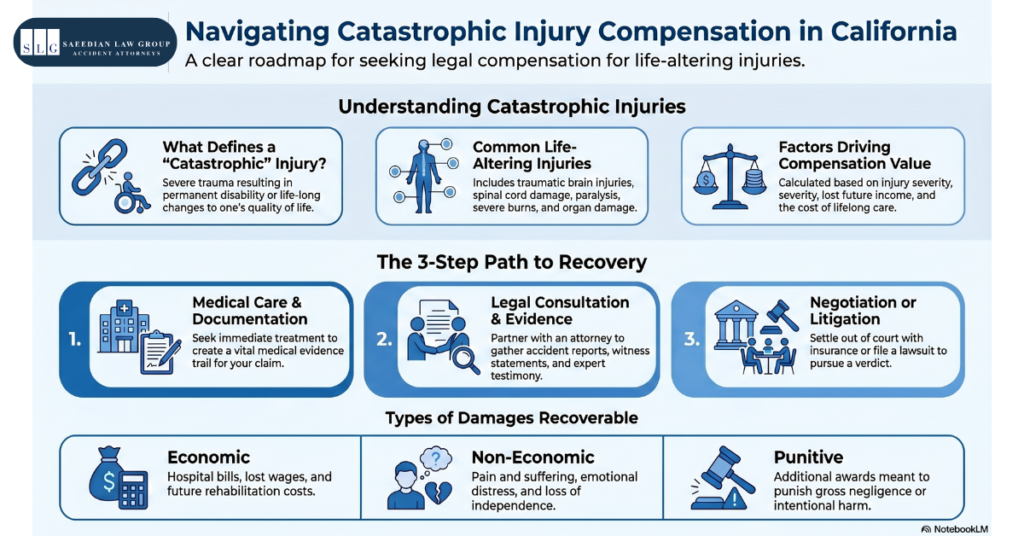
Catastrophic injury compensation is the money a person may receive after suffering a very serious injury that changes their life in a lasting way. A catastrophic injury is not a minor or temporary problem. It is a severe injury that often leads to long-term or permanent disability, meaning the person may never fully recover or return to how they lived before. The purpose of this compensation is to help cover medical bills, lost income, and the ongoing support the person will need to live as comfortably as possible.
A catastrophic injury usually involves severe trauma to important parts of the body. Common examples include severe brain injuries, spinal cord damage that can cause paralysis, severe burns, loss of limbs, serious organ damage, or other permanent injuries. These types of injuries often require long-term care, such as continuous medical treatment, physical therapy, assistive devices, or even full-time help from caregivers. Because of this, the financial impact is much greater than with less serious injuries.
One of the main things that makes an injury “catastrophic” is how much it affects a person’s quality of life. The person may no longer be able to work, move freely, or take care of themselves the way they used to. Simple daily activities can become difficult or impossible. In many cases, the emotional and mental impact is also significant, as the person has to adjust to a completely different way of living.
The amount of compensation depends on several factors. These include how severe the injury is, whether the disability is permanent, the cost of medical treatment now and in the future, and how much income the person has lost or will lose over time. It also considers the need for long-term care and how deeply the injury affects the person’s independence and overall well-being. The goal is to provide enough financial support to help the injured person manage these challenges over the course of their life.
How Do You File a Compensation Claim?
Filing a compensation claim after a serious or life-threatening injury can be overwhelming. However, in this section, we’ll break the process down into simple steps to make it easier for accident victims. Whether the case involves a car accident, medical malpractice, or another form of accident as a result of someone else’s negligence, the goal is to seek fair compensation for medical expenses, lost wages, and the long-term impact of catastrophic injuries.
Step 1: Get Immediate Medical Attention
Your health should be your priority. After a catastrophic accident, you may sustain serious injuries such as spinal cord injuries, traumatic brain injuries, or severe burns, and seeking medical attention immediately can help protect your health. Apart from saving your life, it also creates medical records that serve as important medical evidence in your personal injury claim. Hospital bills, treatment notes, and diagnosis reports will later prove useful when showing the seriousness of your injury.
Step 2: Schedule a Legal Consultation
The next step is to speak with a personal injury attorney experienced in catastrophic injury cases. Many of these lawyers offer free consultations where they review your case and tell you what to do next. They will also explain your rights under California law, negotiate with insurance companies, and guide you through the claims process. Having strong legal presentation can help you avoid unnecessary mistakes and seek compensation.
Step 3: Gather and Organize Evidence
To build a strong case, you need to have solid documentation. This includes medical records, accident reports, witness statements, and proof of expenses like medical bills, rehabilitation costs, and physical therapy. If you have permanent disability or need ongoing care, include details about future medical expenses, medical equipment, and home modifications. This step is critical for showing the full impact of a life-altering injury.
Step 4: File a Personal Injury Claim
After gathering evidence, your lawyer will help you officially file a personal injury claim. This initiates the legal process; however, ensure that everything is submitted correctly and within the statute of limitations. The claim will state your damages, including economic damages such as medical costs and lost wages, as well as non-economic damages such as pain and suffering, emotional distress, and psychological trauma.
Step 5: Handle Insurance Company Responses
After filing a claim, insurance adjusters will investigate the claim. Sometimes, insurance companies may try to dispute liability or reduce the amount they pay. Your lawyer will handle communication, negotiate on your behalf, and push for a fair settlement. An attorney’s involvement is usually very important in catastrophic injury claims, where a lot of money is involved, and future costs can be very high.
Step 6: Continue Treatment and Provide Updates
While your case is ongoing, continue your medical treatment and follow your doctor’s advice. Keep records of ongoing care, lifelong medical care needs, and any changes in your condition or treatment. Regular updates help strengthen your case and ensure your claim reflects the true extent of your injuries.
Step 7: Negotiate or File a Lawsuit
After the insurance company offers a settlement, you and your lawyer can review the amount and decide whether to accept it or not. If you are not satisfied with the offer, you can file a catastrophic injury lawsuit, also referred to as a personal injury lawsuit, to pursue maximum compensation.
At this stage, you’ll present your case before a judge or jury who will make the final verdict. This may involve requiring the other party to pay a specific amount as financial compensation for all your losses. In severe cases involving gross negligence, punitive damages may also be awarded.
What Evidence Is Required for a Claim?

Behind every successful case is strong and clear proof. This proof is what shows what happened, how you were injured, and the life-altering consequences the injury has had on you. Without proper evidence, it can be hard to obtain significant compensation, even if your claim is valid. One of the most important types of evidence is medical records. These include hospital reports, doctors’ notes, test results, and treatment histories.
Medical documentation helps show the type of injury you suffered, how serious it is, and the kind of medical care you need now and in the future. Accident reports are also very important. These could come from the police, workplace officials, or any authority that responded to the incident. These documents usually show how the accident happened and point to who was at fault. Witness statements can also help support your version of events.
These are written or recorded accounts from people who saw what happened. In situations where the case proceeds to court, witness affidavits are used, which are formal statements made under oath. Expert testimony may also be required, especially in cases where you were catastrophically injured, such as third-degree burns. Medical experts or other professionals can explain your condition, the cause of your injury, and how it may affect your life long term. This type of evidence can make your claim stronger and more convincing.
What Are the Potential Outcomes?

There are usually different outcomes of a personal injury claim. While some cases are settled through negotiation, others go to trial. However, the main goal in any outcome is financial recovery. This means receiving substantial compensation that helps to cover your losses. One type of compensation is economic damages. These are the measurable costs you have faced.
They include medical bills, ongoing treatment costs, lost wages, and any future expenses related to your injury. If your injury impairs your ability to work, this could include loss of future income. Another type of outcome is non-economic damages. This form of compensation covers the effects that are not easy to measure with money. They include pain and suffering, emotional distress, psychological trauma, and the impact on your quality of life.
As previously mentioned, there are some cases where punitive damages will also be awarded. They are not meant to cover your losses, but to punish the person or company responsible, especially if their actions were very careless or intentional. While this is less common, it can significantly increase the total compensation in serious cases.
Your Journey to Compensation Starts Here

Dealing with catastrophic injuries after a severe accident can be more than just devastating. It affects your health, your finances, and your everyday life. You may currently be facing ongoing medical treatment, emotional stress, and uncertainty about the future. But you don’t have to go through this alone. With the right legal representation and guidance, you can take the necessary steps toward getting the compensation you need.
For over 16 years, Saeedian Law Group has helped hundreds of catastrophic injury victims recover compensation to cover their losses. With strong experience in handling serious and complex cases, our team of experienced attorneys can guide you through the process of filing a claim and obtaining the compensation you deserve. Contact us to get started.
Frequently Asked Questions
This section provides answers to common questions about catastrophic injury compensation, California in a simple way.
What Is the Average Compensation for Catastrophic Injuries in California?
There is no fixed amount for compensation because every case is different. The amount depends on how serious the injury is, the cost of medical care, lost income, and how the injury affects your daily life. Some cases may settle for thousands, while very serious cases involving permanent disability or long-term care can reach much higher amounts.
How to File a Catastrophic Injury Compensation Claim in California?
The first step is to get medical treatment and make sure your injuries are properly documented. Then, speak with a lawyer who handles personal injury cases. They will guide you through gathering evidence, filing the claim, and dealing with insurance companies. The process includes submitting documents like medical records, accident reports, and proof of expenses.
Are there any Specific Laws in California Regarding Catastrophic Injury Compensation?
Yes, California law has rules that affect how injury claims are handled. For example, there is a time limit known as the statute of limitations, which determines how long you have to file a claim. There are also rules about how fault is shared between parties and how damages are calculated. In some cases, such as medical malpractice, there may be limits on certain types of compensation.
What Types of Evidence Are Crucial for Proving Catastrophic Injury in a Compensation Case in California?
Strong evidence is very important. This includes medical records that show the severity of the injury, accident reports that explain what happened, and witness statements that support your claim. Expert opinions from doctors or specialists can also help explain the long-term impact of the injury.
Can a Catastrophic Injury Compensation Claim Be Settled Out of Court in California?
Yes, many cases are settled out of court. This means both sides agree on a payment without going to trial. Settlements are often faster and less stressful. However, if a fair agreement cannot be reached, the case may go to court, where a judge or jury will decide the outcome.
Disclaimer: This content is for general informational purposes only and should not be taken as legal advice. Every case is different, and the information provided here may not apply to your specific situation. Reading this content does not create an attorney-client relationship. For advice about your case, you should speak directly with a qualified attorney licensed in your state.

Michael Saeedian founded Saeedian Law Group in 2009 with the goal of providing injured individuals and their loved ones with caring, personalized, and attentive legal representation.