
California records thousands of car accidents yearly, with traffic crashes resulting in $166 billion in economic and quality-of-life costs. Fortunately, California enforces a tort law that helps victims recover compensation for the immediate medical costs, ongoing and future treatment, and related costs, including mileage for medical visits.
In the event of an accident in California, the driver responsible ultimately pays medical bills through their liability insurance, since California is an at-fault state for car accidents. However, initial payments are often made by your own health insurance or optional MedPay coverage.
If you’ve been involved in a car accident, Saeedian Law Group can help you recover medical expenses and secure fair compensation. With over 16 years of experience assisting accident victims, our expert car accident lawyers can help you calculate present and future medical costs, negotiate with insurance providers, or represent you in court. Schedule a free consultation with us today for a free case review.
This blog will help you understand who pays medical expenses in a car accident in California, what to do when the at-fault driver can’t afford the bills, and when to contact a skilled car accident attorney.
What Determines Who Pays Medical Bills After a Car Accident in California?
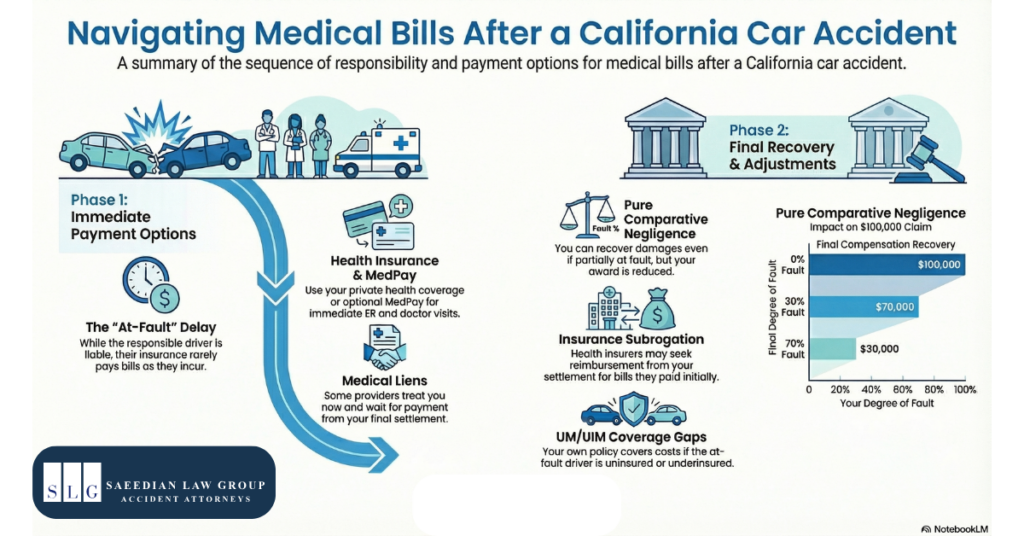
California is an at-fault state for car accidents, meaning the driver responsible for causing the crash ultimately bears financial responsibility for the injured party’s medical bills through their liability insurance. However, immediate payments often come from the injured person’s own coverage or health insurance while claims are processed.
Meanwhile, fault is established through police reports, eyewitness accounts, physical evidence such as skid marks, and insurance investigations. Under California’s pure comparative negligence rules, you can recover damages even if partially at fault, but your award is reduced by your fault percentage (e.g., 30% fault means 30% deduction).
Who Pays Medical Bills Immediately After the Accident?

After a car accident in California, one of the first concerns injured people face is how their medical bills will be paid while their case is still being investigated. Because California is an at-fault state, the person who caused the crash is ultimately legally responsible for the damages.
However, the at-fault driver’s insurance does not usually pay right away. Victims often rely on their own insurance, available auto insurance coverage, or temporary arrangements with medical providers while a personal injury claim or insurance claim is being processed.
Below are the most common ways medical bills are paid immediately after an accident in California.
1. Your Health Insurance
For many injured parties, the first line of payment comes from their health insurance. A health insurance provider or health insurance company covers expenses for medical treatment, including emergency care, diagnostic testing, and follow-up care. This coverage often applies whether the accident was your fault or the other driver’s fault.
However, the coverage is still subject to deductibles, co-pays, and policy limits. While your health insurance company may initially pay medical bills, it can later attempt to seek reimbursement if you recover compensation from the at-fault party.
This recovery process is known as subrogation, which allows the insurer to recover the amount it paid for accident-related medical bills once a settlement offer, court verdict, or other financial recovery is reached. Because of this, it is important to keep detailed records of all expenses, doctor’s appointments, prescriptions, and medical records related to the car accident injury.
2. Medical Payments Coverage (Med Pay)
Another way bills get paid quickly after an auto accident is through medical payments coverage, commonly known as Med Pay. This optional feature of many auto insurance policies can help cover medical costs regardless of who caused the accident.
When a driver has Med Pay as part of their automobile insurance, the policy may cover immediate medical payments such as ambulance transportation, emergency room visits, X-rays, and follow-up medical treatment like physical therapy. Because Med Pay does not depend on liability determination, it can provide faster financial relief to injured parties facing early bills after an accident in California.
3. Out-of-Pocket Payments or Payment Plans
In some cases, injured people may temporarily pay certain hospital bills themselves. Some medical providers require partial upfront payment before continuing treatment, especially when insurance coverage is still being verified.
Hospitals, urgent care facilities, and rehabilitation clinics may also offer payment plans that allow accident victims to manage medical costs over time.
For individuals pursuing compensation through a personal injury lawsuit or car accident case, these early payments may eventually be included in a claim against the at-fault driver, the at-fault party’s insurance, or another insurance company that becomes responsible for damages.
Because of this, accident victims should maintain detailed records of every bill, invoice, and receipt related to the accident in California. Proper documentation helps a personal injury lawyer later pursue compensation and ensure these expenses are included when negotiating a fair settlement or seeking damages through legal action.
When Does the At-Fault Driver’s Insurance Pay?
The at-fault driver’s insurance usually pays medical bills only after the insurance company completes its investigation and the claim is resolved through a settlement offer or court verdict. Under California law, the at-fault party’s insurance is responsible for covering damages once liability is established.
This compensation may include medical expenses, future medical treatment, lost wages, and pain and suffering related to the accident. However, getting a car accident settlement can take time, as the insurance company must review medical records, determine who is legally responsible, and negotiate fair compensation.
What If the At-Fault Driver Has No Insurance or Not Enough Coverage?
In some car accident cases in California, the at-fault driver may have little or no insurance coverage. When this happens, paying medical bills can become more complicated, but injured parties still have some options to recover their medical expenses and other losses.
Uninsured Motorist Coverage (UM)
If the at-fault driver does not have automobile insurance, your own insurance may help pay medical bills through uninsured motorist coverage. This type of motorist coverage is designed to protect drivers involved in a car accident in California caused by an uninsured driver.
When available in your auto insurance policies, it can cover medical costs, medical treatment, and other medical costs resulting from the accident. This allows injured parties to receive compensation for bills after a car accident, even when the other driver has no valid insurance coverage.
Underinsured Motorist Coverage (UIM)
In some situations, the at-fault driver’s insurance exists, but the policy limits are too low to cover all damages. When this happens, underinsured motorist coverage can help fill the gap. After the at-fault party’s insurance pays up to its limits, your insurance provider may use motorist coverage to cover remaining medical costs, additional expenses, and other losses caused by the accident in California.
Filing a Personal Injury Lawsuit
If available insurance is not enough to cover the full damages, injured parties may file a personal injury lawsuit against the at-fault party. Through legal action, victims may seek compensation for unpaid accident-related medical bills, lost income, and other damages caused by someone else’s negligence.
A personal injury lawyer or experienced attorney can review the car accident case, gather detailed records, and help you pursue compensation for the full financial impact of the car accident.
What If You Are Partially at Fault?
California’s pure comparative negligence doctrine, codified under Civil Code 1714, allows partial-fault plaintiffs to recover damages reduced by their fault percentage, even if that percentage exceeds 50%.
California’s Pure Comparative Negligence Rule
In some car accident cases in California, more than one driver may share responsibility for the accident. Under California law, the state follows a pure comparative negligence system. This means that even if you were partly responsible for the crash, you may still recover compensation for your medical bills, lost wages, and other damages.
However, the amount you receive will be reduced by your percentage of fault. For instance, say two drivers are involved in a motor vehicle accident in California. The other driver ran a red light, but investigators also determined that you were speeding at the time of the car accident.
Because both actions contributed to the crash, the insurance company may assigns 70% liability to the at-fault driver and 30% to you. If your total medical bills and other damages from the car accident injury amount to $100,000, you could still seek compensation for a portion of those losses. Under comparative fault rules, you would be eligible to recover 70% of the damages, or $70,000.
Can Medical Providers Wait for Settlement?
Some medical providers may agree to delay payment for medical bills until the case is resolved. This arrangement is often done through medical liens. A medical lien means the provider agrees to treat the patient now and collect payment later from any settlement offer or court verdict obtained in the car accident case.
Instead of requiring upfront payment, the provider places a legal claim on the future compensation recovered from the at-fault driver, the at-fault party’s insurance, or another insurance company involved in the accident in California.
However, if the final settlement offer is smaller than expected, the amount available to cover accident-related medical bills may be limited. Because medical liens must be paid from the settlement before the injured person receives their share, a lower recovery could leave less compensation available for other damages or additional expenses.
This is why many victims work with a personal injury lawyer or experienced attorney who can negotiate with insurance providers and medical professionals to protect as much of the recovery as possible.
Steps to Protect Yourself From Medical Bill Problems After a Car Accident

If you’re involved in a car accident in California, we recommend you take these steps to protect your health, your rights, and your potential compensation.
- Seek Medical Care Immediately: After a car accident in California, get immediate care even if injuries seem minor. On average, 12 fatalities occur daily on California highways. Aside from ensuring all car accident injuries are documented, early treatment can help prevent further health complications.
- Report the Accident to Your Insurer: Notify your insurance provider promptly. Timely reporting helps start the insurance claim process and ensures that available insurance coverage can be applied to your medical bills.
- Use Health Insurance or Med Pay First: Utilize your health insurance or optional medical payments coverage (Med Pay) to cover medical expenses immediately. Med Pay can help with ambulance fees, emergency care, and follow-up medical treatment regardless of fault.
- Keep Detailed Records of Treatment and Costs: Maintain detailed records of all medical bills, receipts, treatment plans, and communications with medical providers and insurance companies. This documentation is critical to proving the full extent of medical and other expenses in a personal injury claim.
- Consult an experienced attorney before agreeing to any settlement offer. A personal injury lawyer can evaluate your case, negotiate with insurance providers, and ensure you pursue compensation for all medical costs, lost wages, and other damages caused by the car accident. Many firms, including Saeedian Law Group, offer free consultations or case reviews to help victims understand who is responsible for covering medical costs in an accident.
When Should You Contact a Personal Injury Attorney?
You should consider contacting an experienced accident lawyer as soon as possible after a car accident in California, especially if any of the following apply. First, if you suffered serious injuries requiring extensive medical treatment or long-term care, legal guidance is crucial to ensure all medical bills are covered.
Secondly, if liability for the crash is disputed or the at-fault driver denies responsibility, an attorney can help establish fault and protect your rights. Third, when medical expenses are high or expected to continue, an attorney can help ensure you do not face unpaid medical bills while pursuing fair compensation.
Need an Accident Lawyer to Help Recover Medical Bills?
An experienced car accident attorney can identify all sources of insurance coverage, including health insurance, Med Pay, uninsured or underinsured motorist coverage, and the at-fault party’s insurance. They can work with medical providers to arrange treatment on a lien basis, ensuring you receive medical care without upfront payments.
A lawyer also calculates both present and future medical costs, negotiates with insurance providers and lienholders, and works to maximize your compensation for all accident-related medical bills, lost wages, and other damages resulting from the car accident in California.
If you’ve been in a car accident and need guidance on who should cover your expenses or if you need help recovering medical bills after an accident, schedule a free consultation with the skilled accident lawyers at Saeedian Law Group to guide you through the process.
FAQs About Who Pays Medical Bills in a Car Accident in CA
Saeedian Law Group accident attorneys have spent over a decade helping victims get fair compensation from insurance companies and at-fault drivers. Here, we’ve highlighted some commonly asked questions about who pays medical bills in a car accident in California.
Does car insurance cover medical bills in California?
Yes, auto insurance can cover medical bills through medical payments coverage (Med Pay) or the at-fault driver’s insurance. Coverage depends on your policy, fault determination, and available insurance coverage for accident-related medical bills.
Do I have to pay medical bills before my settlement?
Not always. You can use health insurance, Med Pay, or treatment on a lien basis to cover expenses until a settlement offer or personal injury claim resolves, helping avoid out-of-pocket payments.
Will my health insurance take part in my settlement?
Yes, if your health insurance provider paid medical bills after a car accident in California, it may seek reimbursement from your settlement through subrogation, reducing the amount you ultimately receive for compensation.
What if I can’t afford treatment after an accident?
If you can’t afford treatment after an accident, medical providers may agree to a lien basis, allowing treatment now and payment from the settlement later. You can also rely on Med Pay, health insurance, or a personal injury lawyer for guidance.
How long does it take for insurance to pay medical expenses?
Payment timelines vary. Insurance companies often wait until liability is confirmed and the claim is resolved. Investigations, negotiations, and medical record reviews can take weeks to months before medical bills are paid.
Can I recover future medical costs in California?
Yes. A personal injury claim or settlement can include future medical expenses, such as ongoing physical therapy or long-term care, calculated with documentation from medical providers and verified by your personal injury lawyer.

Michael Saeedian founded Saeedian Law Group in 2009 with the goal of providing injured individuals and their loved ones with caring, personalized, and attentive legal representation.